


AURA Festival 2026: Bulgaria's Electronic Ambitions Take Flight
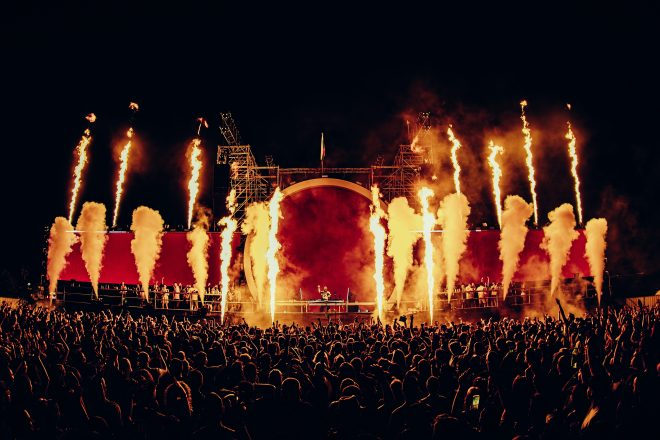
Just a few metres from the runways of Sofia International Airport, where planes continuously crossed the skyline, AURA Festival unfolded over three days as one of the most ambitious electronic music events Bulgaria has seen to date.
Held at Sofia Airport Park from June 19–21, AURA welcomed more than 10,000 attendees and over 50 artists across three stages, bringing together international headliners, emerging talent and a strong representation of Bulgaria's local electronic scene. More importantly, it offered a glimpse into the country's growing aspirations to position itself on Europe's festival map.
Created by Fest Team, Bulgaria's leading concert promoter, AURA was conceived as a natural evolution of the large-scale electronic events the company has presented over the years. The festival's long-term vision is clear: to establish a world-class electronic gathering capable of redefining what audiences in the region expect from a festival experience.
From the moment gates opened on Friday, the scale of the production became evident. Three distinct stages catered to different corners of electronic music culture while maintaining a cohesive identity. The Main Stage delivered the festival's most expansive productions, combining large-scale visuals, powerful lighting design and an impressive sound system that carried across the vast green surroundings. While many attendees packed the front rows, others chose to experience the performances from the grass, creating a relaxed atmosphere rarely seen at festivals centred around major EDM headliners.

Elsewhere, the Tower Stage quickly established itself as the underground heartbeat of the weekend. Positioned dramatically beside the airport, its industrial aesthetic complemented a programme that leaned towards techno, house and more adventurous club sounds. The Moon Stage, meanwhile, served as a showcase for local and regional talent, reinforcing one of the festival's most important commitments: creating opportunities for Bulgarian artists to share the spotlight alongside internationally recognised names.
Friday's programme highlighted the diversity that would define the entire weekend. Main Stage appearances from ALOK, Mahmut Orhan, Topic and YOUNA attracted a broad audience spanning different generations and musical preferences. At the Tower Stage, Denis Sulta, Chinonegro, Shosho and Factor delivered a markedly different energy, proving that AURA's identity extends well beyond mainstream festival programming.
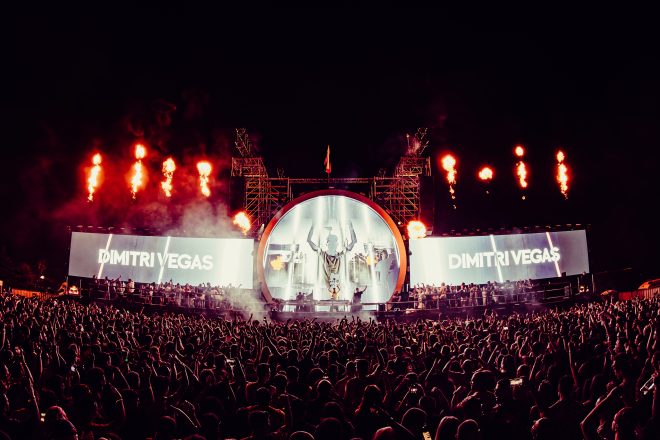
By Saturday, attendance had visibly increased and the energy across the site reached another level. The festival's curatorial strength became increasingly apparent as audiences moved fluidly between stages rather than remaining loyal to a single sound. On the Main Stage, MATTN, Dimitri Vegas, BIIA and the unpredictable genre-bending selections of ¥ØU$UK€ ¥UK1MAT$U offered one of the weekend's most dynamic sequences.
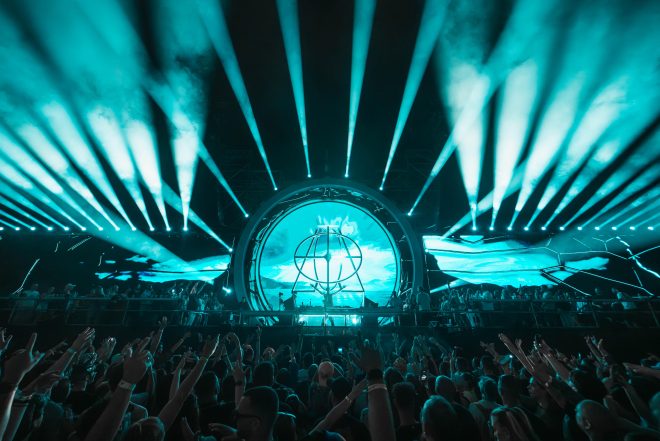
The Tower Stage arguably hosted some of the festival's most memorable moments. After strong sets from The Muffin Man and Laure Croft, Dutch collective Parallelle delivered a standout live performance that many attendees cited among the highlights of the entire festival. Bringing live instrumentation into an environment often dominated by DJ sets, the group demonstrated the creative range that AURA seeks to champion.
The Moon Stage continued to showcase Bulgaria's local scene, with Angelos drawing a particularly enthusiastic crowd before Berlin-based Julya Karma and the closing back-to-back from Silver Ivanov and Milen carried the stage into the early hours.
The final day maintained the momentum. Jesabel and Laura van Dam set the tone before Armin van Buuren closed the Main Stage with the kind of emotionally charged performance that has made him one of electronic music's most enduring figures. One of the night's defining moments arrived when he was joined on stage by singer Sacha, transforming the performance into a collective singalong that resonated far beyond the festival's towering production.
At the Tower Stage, Gallya and Onyvaa reinforced another notable aspect of AURA's programming: the strong presence of female artists throughout the lineup. Across all three days, women occupied prominent slots across multiple stages, reflecting a broader and more inclusive vision of contemporary electronic culture.
Beyond the music itself, AURA succeeded in creating an environment that felt both welcoming and professionally organised. Interactive brand activations, games, merchandise giveaways, diverse food and beverage options, accessible water stations, well-maintained facilities and visible security contributed to a smooth experience throughout the weekend. Dedicated hospitality areas for artists and media further demonstrated the festival's attention to detail.
What ultimately distinguishes AURA is not simply the calibre of its headliners, impressive as they may be. With performances from three of DJ Mag's current Top 5 DJs, including Bulgaria debuts and globally recognised festival names, the event certainly delivers on spectacle. Yet its greatest achievement lies in balancing those marquee acts with local artists, underground programming and a genuine investment in community-building.
For a country whose electronic music scene has often existed outside the wider European festival conversation, AURA represents something larger than a successful weekend. It signals a growing confidence in Bulgaria's ability to host events that can stand alongside established international festivals while retaining a distinct local identity.
If the 2026 edition is any indication, AURA is not simply building a festival. It is building a destination.
