


Docklands festival 2026: münster’s day-to-night ritual returns
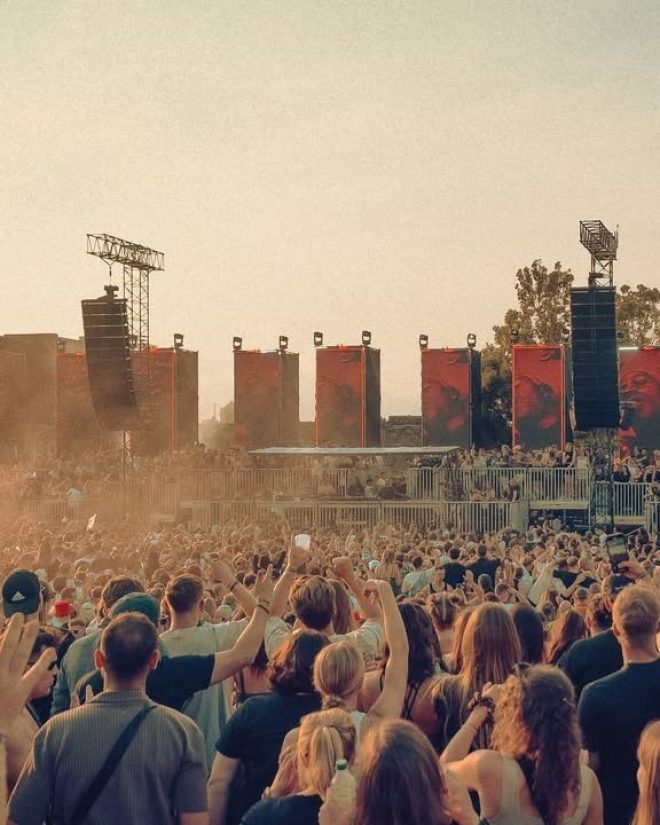
On June 6, Münster shifts its center of gravity toward Hawerkamp. Docklands Festival returns with a format built around movement: daylight on the industrial edge of the Dortmund-Ems Canal, then a gradual descent into the clubs that have shaped the area’s after-dark identity. The 2026 edition brings together 15,000 visitors from more than 20 countries, with around 100 artists spread across five open-air stages before the night program opens across nine floors in six clubs.
The strength of Docklands Festival has always been architectural as much as musical. It does not treat the festival and the club night as separate events. The day begins outside, with the Main Stage, Canal Stage, Rail Stage, Kamp Stage, and the new Backyard Stage forming distinct zones across a 20,000-square-meter site. By night, the route continues through Fusion, Fade, Heaven, Triptychon, Sputnikhalle, and Favela, keeping the crowd inside the same cultural circuit rather than dispersing it.
This year’s additions sharpen that structure. The Backyard Stage introduces a more intimate open-air space, focused on reduced, hypnotic techno. The Main Stage and Rail Stage arrive with revised visual designs, while the Canal Stage remains tied to the waterline, framing house music in a setting that feels specific to Münster rather than borrowed from the wider festival template.
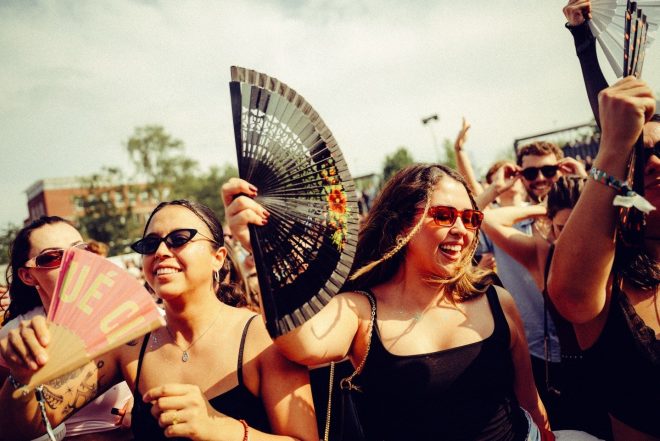
Musically, Docklands Festival 2026 sits between memory and pressure. Âme live b2b Henrik Schwarz live brings a deep, performative language to the bill. Cinthie, DESIREE b2b Jimi Jules, Denis Horvat, and SYREETA pull the program toward house, rhythm and emotional control, while Marlon Hoffstadt, DJ Gigola, Kalte Liebe live, LOLSNAKE, Adrián Mills and Schrotthagen push into faster, harder and more volatile terrain.
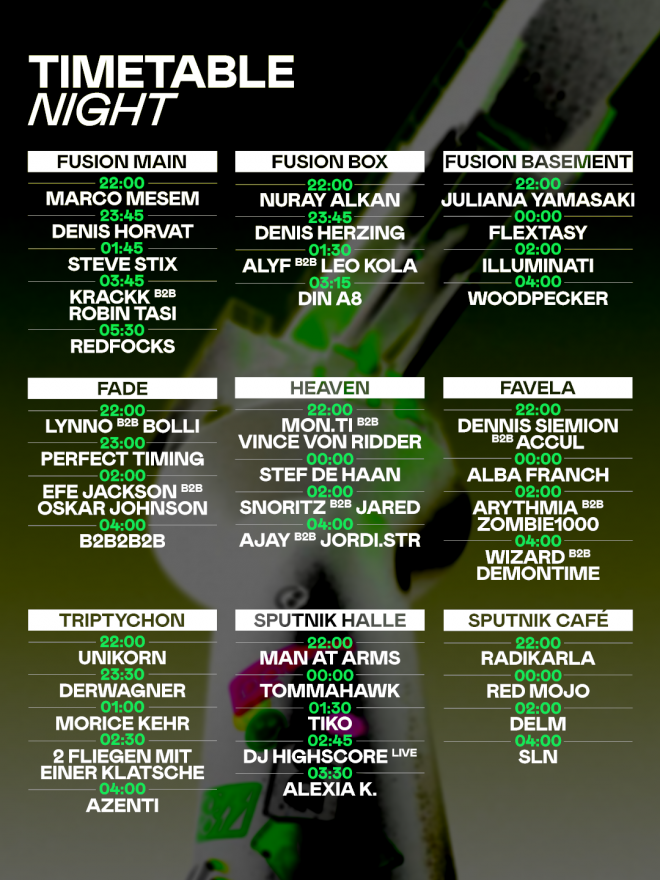
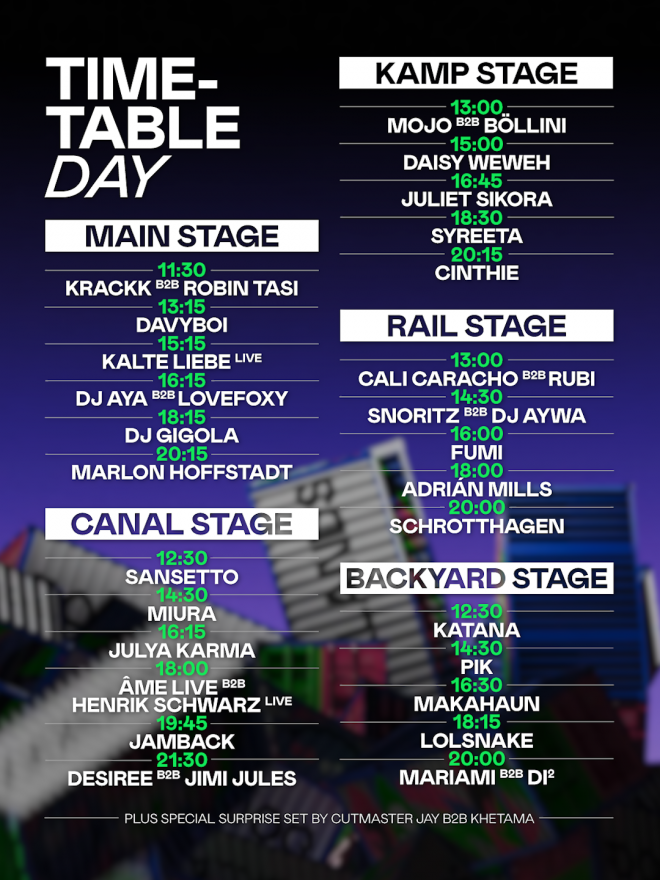
The local program matters just as much. Docklands Festival places Münster’s own network beside international names, not as decoration but as part of the festival’s grammar. That balance is what gives the event its shape: not a parade of bookings, but a map of scenes, rooms and sounds moving through one day and one night.
By the early hours, Docklands Festival becomes less about scale than continuity. Open air gives way to club architecture. Daylight collapses into a strobe. The canal, the concrete, the rails and the rooms become part of the same route. For one Saturday in June, Münster does not host electronic music from a distance. It lets the city rearrange itself around it.
