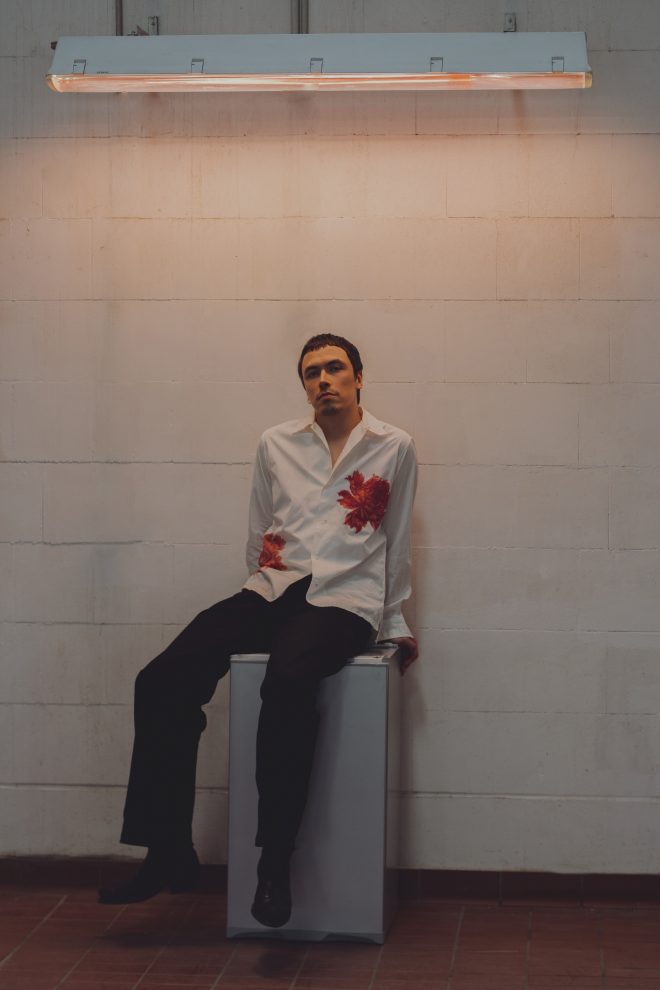


Ennio: instinct before structure
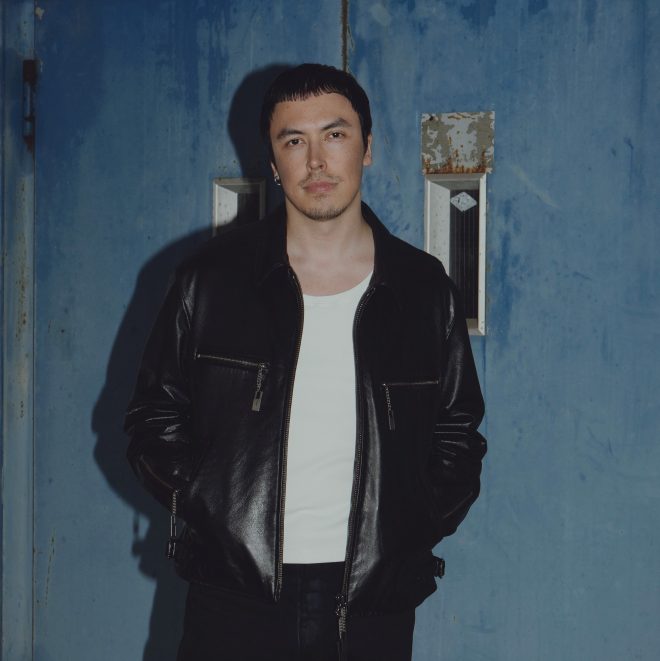
ENNIO´s relationship with music did not begin with ambition or strategy, but with exposure so constant it dissolved the idea of distance. Sound was not something to reach for. It was already there, embedded in the rhythms of daily life, long before it suggested a future.
What emerges from that kind of beginning is a different kind of instinct. Not one built through formal training or external validation, but through repetition, curiosity, and absorption. The foundations are less about technique and more about familiarity, about understanding how music behaves before understanding what it means to make it. That early closeness continues to define how ENNIO moves now, across production, DJing, and the communities that have shaped his trajectory.
The result is a project that resists rigidity. It does not sit comfortably within fixed categories or narratives of progression. Instead, it moves through phases of openness and recalibration, held together by a consistent internal logic rather than a defined external identity. What holds it in place is not form, but feeling.
“My parents placed a drum kit in my room when I was a little kid, and I definitely fucked up our neighbors with it, haha. Music was always there. I discovered a lot of music through my parents. My mom was listening to a lot of Prince and Sade. My Dad was all over the place. I came to a lot of his gigs and studio sessions, later in my teens, we had that ritual of getting into his car, driving around the city during the day or night for hours, showing each other music, and discussing it. I prepared mixtapes to show him what I am currently listening to. I learned a lot from these drives. I also discovered The Prodigy and Aphex Twin by going through his CDs, which had a big impact on me, as well as Prince via my Mom. Like a lot. I think what all that did early on is that I never saw music as something distant or ‘professional.’ It didn’t feel like this unreachable thing, but normal. Something you live with. I used to spend hours and hours listening to music from random corners of the internet. When you still looked for yourself without an algorithm showing you what you already like or should like. It was easier to find unexpected things and not just what everyone or your own taste dictates. No for you page.”
That sense of openness carried directly into his earliest attempts at making music. There was no formal entry point, no structured introduction to production. Instead, it emerged through fragments, through tools that were never designed to be taken seriously, through spaces where experimentation mattered more than outcome. The process was informal, but it established something essential: a way of working that prioritized instinct over instruction.
Those early environments, from online forums to improvised studios, functioned as both playground and testing ground. They allowed for a kind of freedom that becomes harder to maintain once expectations begin to form. Yet that same unpredictability continues to define his approach, even as the scale has shifted.
“As a teenager, I got a PlayStation for my birthday and played a lot of Metal Gear Solid, Tekken, and these kinds of things, but I also got this ‘music production’ game, I can’t remember the name of, but that’s how I started making beats. My friends started rapping on them, and at some point, I moved to Logic and got more advanced. I became a huge Neptunes and Timbaland fan and ended up on this closed Neptunes fan forum, where a lot of people exchanged music, even people working in the studio with the Neptunes sometimes leaked exclusives, etc. It was a wild and fun place. There were other now big artists like Tyler, The Creator on it, chatting with each other, exchanging beats, tracks, whatever. We did beat battles, and I actually won some, even against Tyler, haha. After finishing school, I moved to Tokyo via the Working Holiday Program for a year. I already had some music online and produced more towards electronic music. Then, some ‘random’ person wrote me because I changed my location to Tokyo, we hung out and one time he asked why I don’t DJ. That person became a friend and basically threw me into my first gig after one week of learning on his controller. That’s basically how I started DJing. Not planned. But that randomness is a big part of how everything developed. And I think the mindset stayed the same until now. Still very instinct-driven, experimenting and not fully ‘controlled’.”
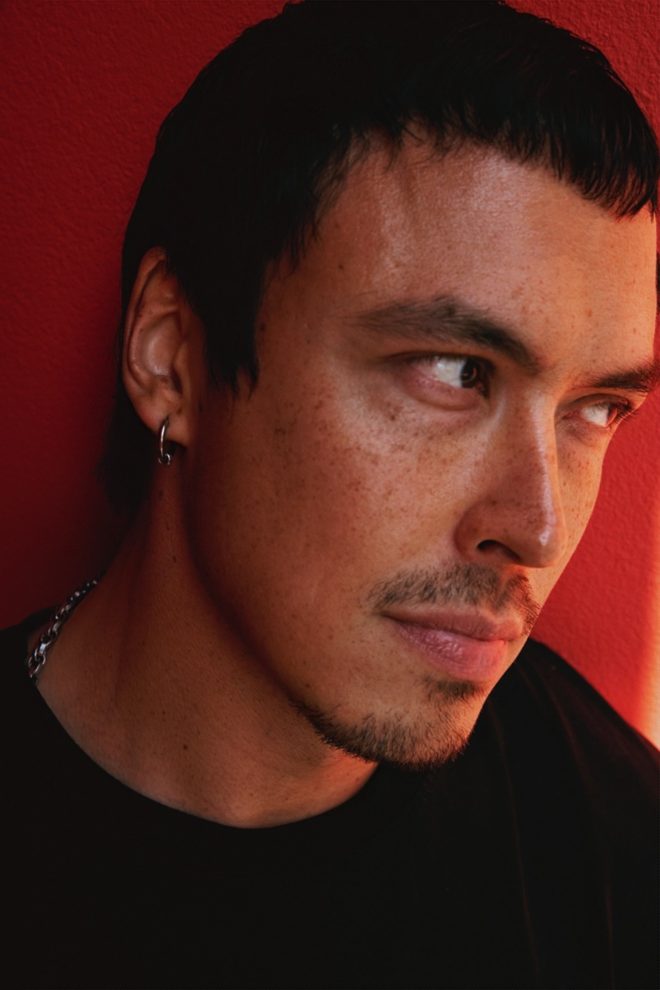
Not everything moved at the same pace. Alongside that instinctive development sat a hesitation that shaped the trajectory in quieter ways. Opportunities appeared early, but were not always taken. Visibility, rather than being something pursued, became something resisted, complicated by a lack of confidence that often contradicted the external validation he was receiving.
That period now reads less as a setback and more as a phase of observation. Distance created space to understand the environment without being fully absorbed by it. But it also required a shift, a moment where hesitation could no longer be sustained without consequence.
“It definitely slowed things down. There were moments where I could have pushed more, shared more, taken great opportunities, but I didn’t. At the same time, I think it shaped how I see things now. Being more withdrawn forced me to observe a lot. There was also a big loss in my family that really reset things and made me rethink a lot. For a long time, I had this contradiction where I knew I was good and liked my music, but at the same time, didn’t feel good enough. I got opportunities early on because people believed in me, but I often ghosted them after the approach or missed deadlines simply because I felt too insecure or not good enough. Even though they gave me those chances because they thought I was good. I just didn’t see it. But the last few years, since I opened myself up because of good friends pushing me more and more, giving me more confidence and people I respect and look up to showed a lot of love for my music too. At some point it clicked. I love music too much, I wanna be able to live from it, but mostly just live in it. Being part of TILT and now having started BUTO BAYANG played a big role in that shift too.”
The shift did not happen in isolation. It unfolded through community, through environments that replaced individual pressure with shared momentum. Projects like TILT and BUTO BAYANG did not simply provide platforms. They redefined the conditions under which the work could exist, transforming something solitary into something collective.
That transition altered more than visibility. It reshaped confidence, authorship, and the way identity could be expressed within a broader framework. The individual voice remained, but it was no longer isolated from its context.
“Both TILT and BUTO BAYANG changed things a lot because they made everything less isolated for me. Before that, it was more about me in my own world, in my room, doing things alone. Not opening up enough. Through this community, it became something I started to share. With TILT, it was also the first time I really felt part of something that had a clear identity and intention beyond individual careers. It gave me confidence because it wasn’t just me putting myself out there; it was us building something together, supporting each other. With BUTO BAYANG even more, because it also connects to my identity and background in a more direct way. It gave me a framework to explore things I probably wouldn’t have fully addressed on my own. What you can’t build alone is that sense of reflection. Other people mirror things back to you, challenge you, and open new directions. That’s what really changes your perspective.”
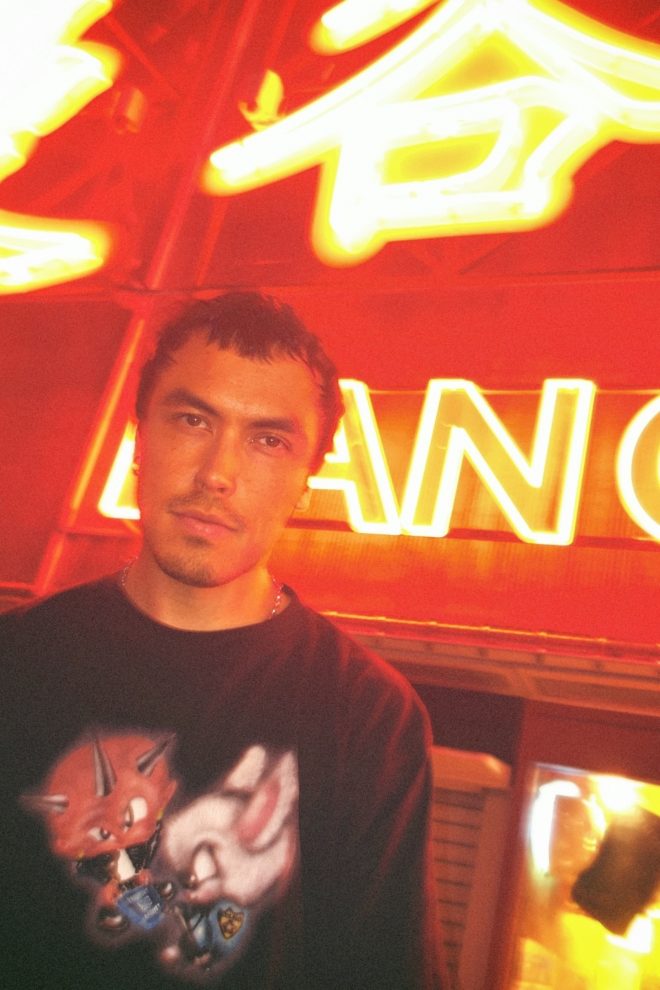
That sense of openness carries directly into the way he approaches the dancefloor. There is no attempt to impose authority or construct a narrative of control. The role is deliberately reduced, repositioned as a conduit rather than a center. What matters is not precision, but presence, the ability to respond rather than dictate.
“For me, it’s simple, I love music. I don’t see myself as this figure wanting to be in the spotlight, trying to prove something, but just being a vessel for what I love. I’m not trying to impress with technical skills or show off. I just want to create and share emotions. Seeing people dance, connect, and lose themselves gives me way more than anything else. That moment where the whole room moves together in symbiosis, inside the music. That’s what gets me high. A set doesn’t have to be perfect. Imperfections often make it better. So I love improvising on the spot, with whatever seems right at the moment. As long as it makes you move, I’m happy.”
That same refusal to impose structure extends into his relationship with genre. Rather than functioning as a boundary, it becomes a set of tools, interchangeable and fluid depending on context. The resistance is not ideological, but practical. Fixing the sound too tightly would limit the ability to respond to the room.
“I don’t think about it too much. To me, music is universal and shouldn’t have borders, so I feel just as at home playing techno as I do with house or anything in between and surrounding. It’s all about what the room needs. There’s definitely pressure to fit into a box because it’s easier to market, but I’d rather be hard to categorize than lose my freedom. I think sticking to your guns pays off in the long run anyway, and thankfully, being genre-fluid is becoming much more normal these days.”
With BUTO BAYANG, that openness takes on a more defined cultural dimension. The project operates as both a platform and a network, addressing a gap that exists not in talent but in visibility and connection. The intention is not to centralize attention, but to redistribute it, creating conditions where collaboration can emerge organically.
“There are so many Asian artists, but the visibility and connection between them, especially around the world, is still limited. We didn’t want to create just another collective that mainly shines a light on itself. The idea was more to build something collaborative. An actual network, a node, where artists can connect, support each other, and create something together. Balancing personal motivation and cultural responsibility is something we’re still figuring out. It’s important not to become too heavy or preachy. The project should still feel alive and creative. We believe that if you build something authentic and real, the statement makes itself.”
That approach to identity remains deliberately understated. Representation is not framed as a message to deliver, but as something that exists through presence, through the accumulation of choices, collaborations, and references that carry meaning without needing to declare it explicitly.
“I don’t sit down thinking ‘this needs to represent something.’ It happens more indirectly through who I work with, through what inspires me, or my personal life. I think subtlety is important. People can feel things even if they don’t fully understand them intellectually. Music should still work without explanation. Representation for me is more about presence than explanation. Just being there, collaborating, releasing, that already says something.”
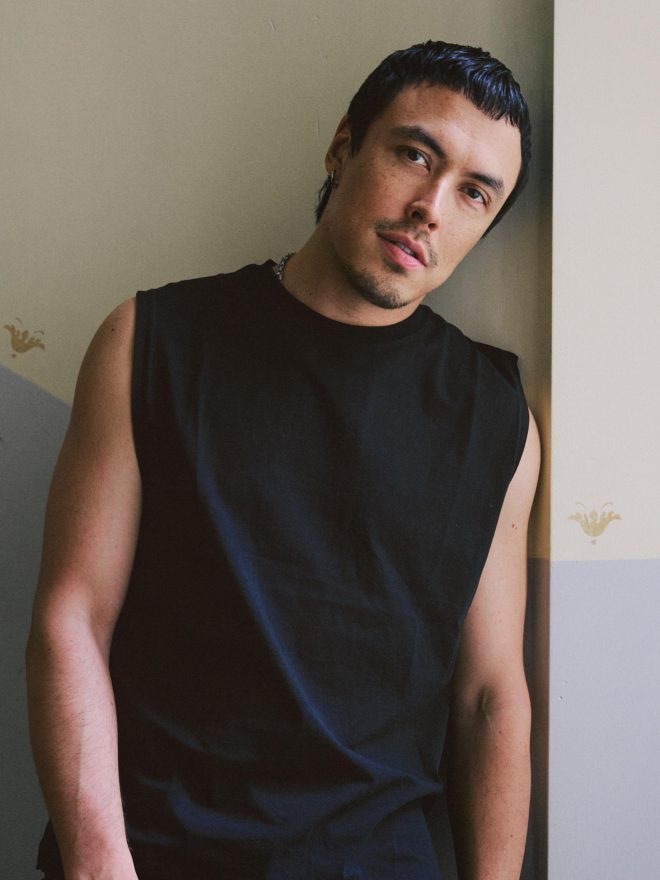
Within that framework, playfulness becomes a structural element rather than an aesthetic detail. It disrupts rigidity, preventing the music from becoming overly controlled or self-conscious. The tone remains open, allowing for shifts in energy that feel instinctive rather than calculated.
“I think it’s just how I approach things. I wanna have fun, stay naive, and not take things so seriously. I think it’s important because club music can become very rigid or self-important. A child like gaiety breaks that. Dance music doesn’t need to be overthought. It’s about the raw feeling. If I’m making ambient music or otherwise, it’s more personal and ‘deep’, but for the club, I just go with my gut. I don’t want to overanalyze what I’m doing and just want to feel it.”
What has changed most in recent years is not the instinct itself, but the willingness to follow it outward. Visibility no longer carries the same weight of hesitation. It becomes part of the process, something to navigate rather than avoid, even as the surrounding structures demand new forms of engagement.
“It’s moved from a feeling of hesitation to a feeling of purpose. That said, keeping up with social media culture is definitely a struggle. It’s hard when you’re expected to be a promoter, content creator, and a manager on top of being an artist. I try to go with the flow of it without losing myself in the process. I don’t want to force a digital version of myself that isn’t real. If I can keep the joy in it and the music, that’s what matters most. I try not to get caught up in expectations or external validation and focus on keeping that sense of fun and naivety. As long as it feels honest to me, everything else is secondary.”
What remains constant is the orientation. Not toward control, not toward definition, but toward maintaining contact with the conditions that first made the work feel real. The instinct is still there, still leading, even as everything around it continues to expand.