


Is the Dialogue Equal? Five Queer Collectives on What Latin America and Europe Actually Exchange at WHOLE Festival 2026
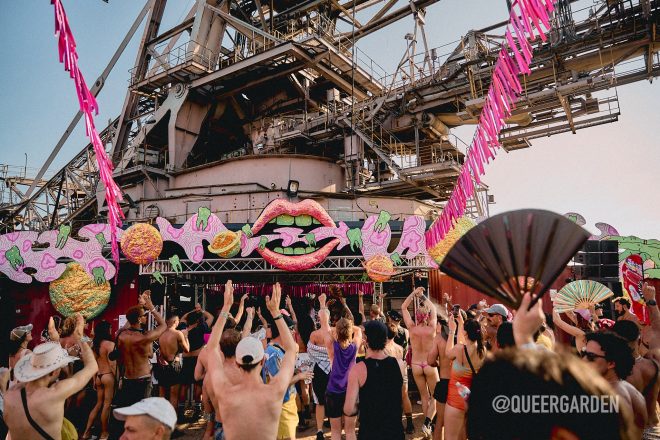
Photo Credit @queergarden
Every year, WHOLE Festival arrives at Ferropolis with a lineup that reads like a dispatch from the global queer underground. But beneath the bookings and the stages, a more specific conversation has been building across multiple editions: the one between Latin American queer collectives and their European counterparts.
Last year, this series introduced Me Siento Extraña and Fiesta Dame, two Spanish-speaking collectives navigating that dialogue from Barcelona and Santiago. This year the conversation deepens, seeing WHOLE 2026 feature fresh LATAM hailing collectives 999 Ciclo from Buenos Aires, LATINEO from Barcelona, PERVERT from Mexico City, MARICAS from Barcelona, and Fiesta Dame returning for a third time from Santiago. Across five very different collectives, the same question kept surfacing: what does this exchange actually look like when you examine it closely?
Furthermore, just last month WHOLE Festival announced its debut satellite expansion, set to touch down in Brazil for the first time on November 6th, 7th, and 8th this year in São Paulo.
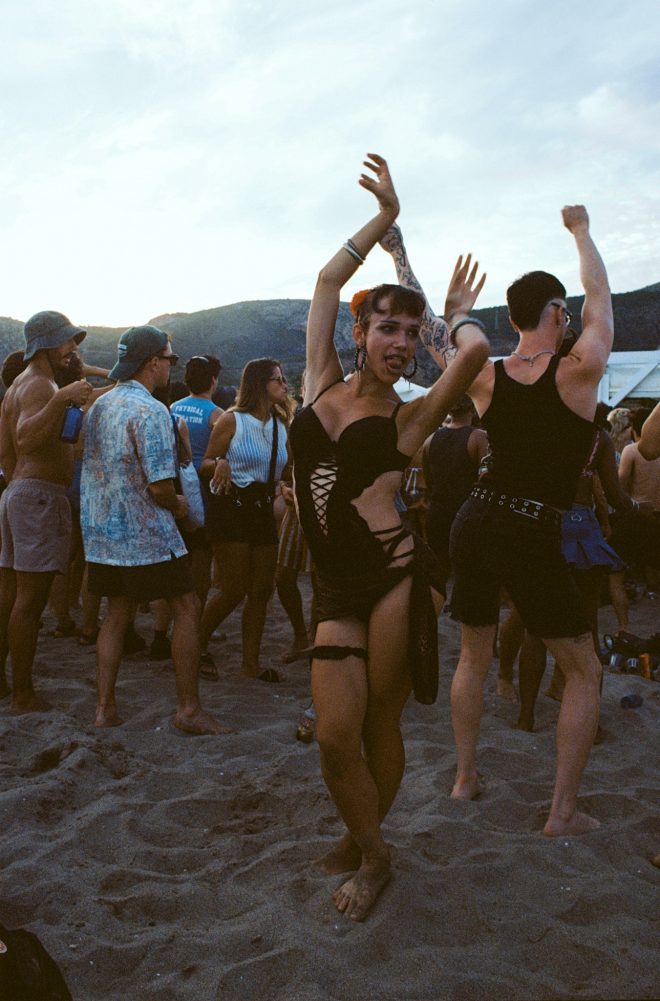
LATINEO (Barcelona)
LATINEO launched in March 2023, founded by Chilean migrants Monse Ahumada, Colomba Molina, and Felipe Montalba in Barcelona. In less than three years the collective has played Boiler Room at Primavera Sound, taken the party to New York, São Paulo, Berlin, Santiago, and London, and become one of the most talked-about queer club nights in Europe. Their artists at WHOLE are M8NSE and ACIDNENA.
When the founders describe the early days, expansion wasn't the main objective. "We were just trying to create the kind of party we felt was missing around us, mainly for us and our friends." What surprised them was how quickly that impulse traveled. "New York doesn't feel like São Paulo, Berlin doesn't feel like Santiago, but there are certain experiences around migration, identity, belonging and nightlife that connect people across all those contexts."
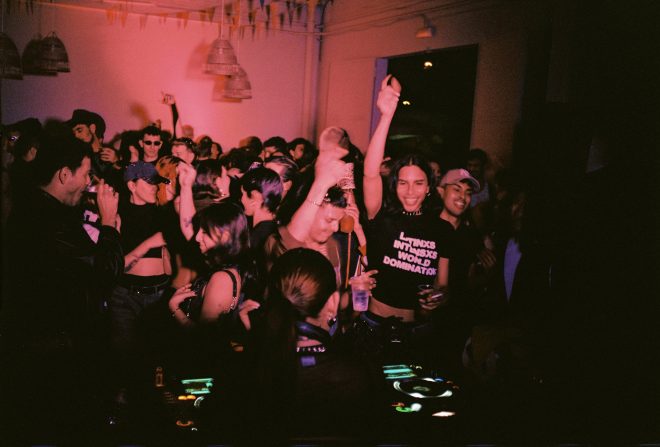
That connection is also, they note, a reaction to something specific. "People are a bit tired of simplified ideas of what Latin culture is supposed to look or sound like. There's a curiosity now for projects that come from a specific experience and don't try to flatten themselves to fit expectations."
On the question of European validation, LATINEO is the most direct of the five collectives. "It doesn't feel like people need validation from Europe in order for that work to have value. The main reason to build connections here is to create opportunities, collaborations and ways for artists to travel and sustain their work." WHOLE, in their framing, earns its place not as a legitimating stage but as a meeting point. "Some of the most important things happen outside the stage."
For M8NSE, the Chilean producer and DJ who co-founded LATINEO and performs at WHOLE this year, carrying Santiago's underground into European rooms is less about representation and more about a disposition. "Growing up in Santiago's nightlife was also a way of exploring who I was. A lot of us had this desire to hear the music we loved in places where we felt comfortable and free to experiment with our identities. That meant people put a huge amount of effort into making things happen, because we genuinely needed those spaces to exist." That impulse to organise from necessity, she says, is what she tries to carry with her.
Two weeks before WHOLE, LATINEO and Fiesta Dame produced a joint event in Barcelona. It's a detail that says more about how this network actually functions than any mission statement could.
ACIDNENA, the Argentine DJ and LATINEO resident also performing at WHOLE, puts the challenge of growth plainly. "As an artist from Argentina and part of a Latin collective, it's important to carry the resilience of the scenes in our countries with us. There's a long history of people making things happen against the odds, and that spirit of self-organisation has always been the foundation. There's struggle in it too, and I think it's important not to lose sight of that as things grow."
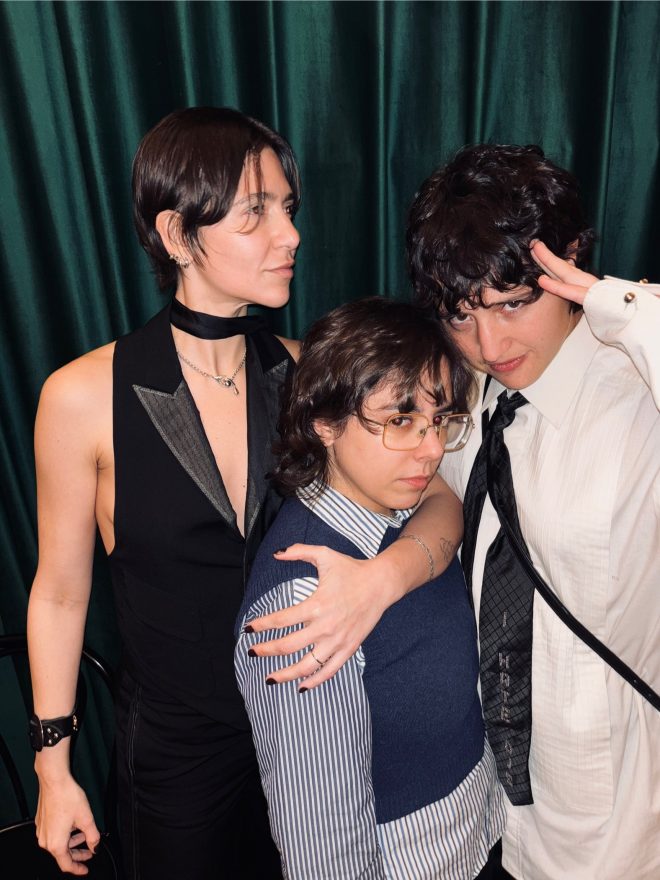
MARICAS (Barcelona)
MARICAS was founded in January 2018 by Eloisa Blitzer, Gina Guasch, and ISAbella, born from the absence of any night in Barcelona that centered electronic music and queer culture. Eight years later, the collective has produced over 150 events across Europe and the Americas, launched MARICAS Records, sold out Nitsa three times at 2,500 people per show, and won Resident Advisor's Party of the Year for 2024. At WHOLE 2026, ISAbella and Roza Terenzi perform under the MARICAS banner.
This is their third time at the festival, and for the founders the growth feels personal. "It's been a beautiful journey as queer individuals and also as queer promoters to see so many new collectives growing and a festival for us just continues to grow as well."
ISAbella, who was born in Cali, Colombia, and co-founded MARICAS after relocating to Barcelona, watches the current wave of Latin American artists breaking through European stages with real feeling. "We are just over the moon to see how Latin America is taking over Europe. As marginalised communities, double as queers and Latines, we've been around for a while, and it's beautiful to see that much focus put in our community. Getting to places that we never thought we could go and also getting the spotlight in high paying gigs as well."
But she is clear that visibility and structural change are not the same thing. When she looks at the Barcelona scene she helped build, what she sees is an ecosystem that is more diverse and interconnected than 2018, and also still unfinished. "Queer aesthetics have become more present in nightlife but that doesn't automatically mean that power structures have changed. There are still questions around accessibility, economic precarity, representation, and how we protect community spaces. What remains unfinished is creating conditions where queer artists, organisers and audiences can build sustainable futures, not just temporary moments of visibility."
For Roza Terenzi, the Australian producer based in Berlin who performs with MARICAS at WHOLE, the pull of the collective is simpler to describe. "I always feel the most myself when I'm playing with and for my community. The raw but chic, sexy infectious energy, it all gets heightened in me when I'm playing a Maricas set."
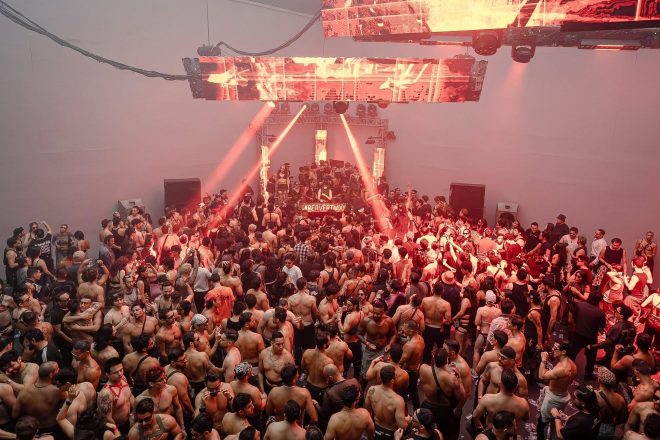
PERVERT (Mexico City)
PERVERT launched in April 2017, founded by Robin García and Alberto Herbel. It is one of the longest-running queer electronic parties in Mexico City, nomadic by design, moving through former prisons, warehouses, old power plants, and abandoned theatres. The collective references the historic Pervert Lounge, one of Mexico's first electronic clubs from the 1990s. Their artists debuting at WHOLE this year are MIKITA and KVKN.
Mexico City's nightlife has become one of the most discussed on earth, but García is careful about what that attention actually means. The local government has been shutting down rave venues since last year, and organising a party with PERVERT's specific characteristics has become harder, not easier, as the city's profile has risen. Herbel describes the gap between discovery and understanding bluntly. "A lot of what gets consumed from the outside are simplified images and narratives that leave out the complexity of the communities actually building the scene day by day. The essence of Mexico City's scene isn't just in the music or the aesthetics. It's in the mixing of worlds, in people from different backgrounds sharing the same space, in the creativity that comes from scarcity, and in the ability to create spaces of freedom within a complex city."
MIKITA, the trans Mexican DJ and producer who has been a Pervert resident since formally entering the electronic scene in 2023, describes what it means to carry that weight to WHOLE for the first time. "As a trans woman living in a country that statistically has the second-highest number of transfemicides globally, the uncertainty of going out on the street, especially at night, is always there. But it's precisely then that spaces like Pervert become true refuges and sanctuaries for queer people, where you can feel safe and at home." She addresses the European context directly. "For the European scene, they should be very proud and grateful for the music culture they have built, the safety of their countries, the spaces for queer people, the fact that they can live the rave culture with such freedom, because it is not like that all around the globe."
KVKN, the Ecuadorian-born DJ and cultural organiser based between France and Germany, brings a different perspective. They work both circuits as a curator in Paris and as founder of Concrete Club in Quito, and they push back gently on the Berlin-Mexico City comparison that has become a critical shorthand. "Berlin had the Wall. They know what it means to fight for freedom and to rebuild from division. That struggle shaped their resilience and their commitment to queer liberation. Mexico's struggle is different but equally real: we fight against invisibility, violence, and discrimination that persists in the everyday. In Mexico, every safe queer space exists because someone fought for it within a system that still doesn't fully protect us." The point is not that the two cities are equivalent but that both carry histories of survival onto the same dancefloor, and that neither should be reduced to the other's reference point.
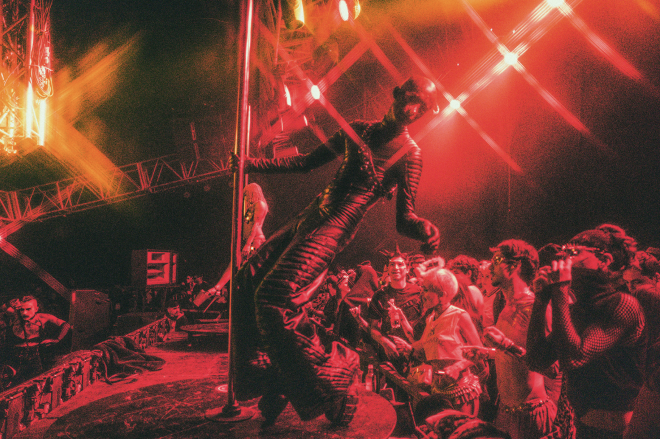
FIESTA DAME (Santiago)
Credit: https://www.instagram.com/pedromagnere
FIESTA DAME returns to WHOLE for its third consecutive year. The collective describes itself as a space of resistance and freedom for the LGBTQIA+ community in Santiago, where safety is understood not as a label but as something the crowd builds collectively, night by night. This year's lineup brings back NSPERGER, Katalina Schwarz, and Catarsis Absoluta alongside WHOLE debuts from Daniela Fuzz, Leonor Baesler, and Sara.
NSPERGER, who co-founded the collective and has become one of the more internationally recognizable DJs to come out of Santiago's queer underground in the past year, played BAUM in Colombia on the Resident Advisor 25th anniversary stage, BASEMENT in New York, and BRUTAL in Mexico. He stays based in Santiago by choice, and the reasoning is worth understanding.
On the question of whether the dialogue between Latin American and European queer scenes is equal, NSPERGER is the most considered of the five. "The queer community is always the most willing to build from a community-based perspective and generate true reciprocity." He points to networks of queer organisers across Latin America, including 999 Ciclo in Buenos Aires and regional initiatives like Brutal and Basement, as evidence that this reciprocity already exists independently of European stages. "For this dialogue to be equitable, the key is, and always will be, reciprocity."
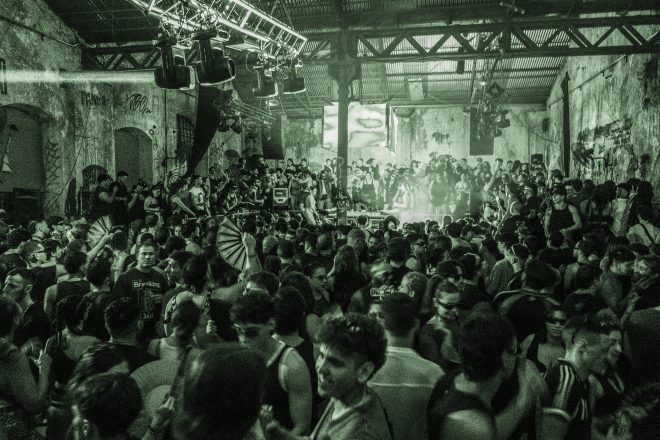
999 CICLO (Buenos Aires)
999 CICLO is a queer collective and event series born in Buenos Aires, built on the belief that the dancefloor can be a refuge where bodies and identities coexist without hierarchy. The collective marches in Buenos Aires Pride with its own truck and has collaborated with Boiler Room and Herrensauna. At WHOLE their artists are BOTOX FATAL, the duo of Valentina Spirito and Manu Calmet, and DJ Loui From Jupiter4.
When asked about those collaborations, 999 is careful not to let them define the project. "They're really just references. We don't see ourselves as more or less because we've collaborated with those promoters. They came to Argentina looking for what 999 had already created: our own identity and way of doing things." The collective wants European audiences to understand that 999 is not a product of international recognition. The recognition came to meet something that already existed.
Part of what makes 999 recognisable beyond its music is the visual world created by Martín Borini, known as Ailaviu, whose scenography and installations travel with the collective. "His scenography and installations give 999 a distinctive identity that people immediately recognise, making the project much more than just a party or a music program." That insistence on the full artistic package is both an aesthetic position and a political one: the scene they are exporting is not a sound alone.
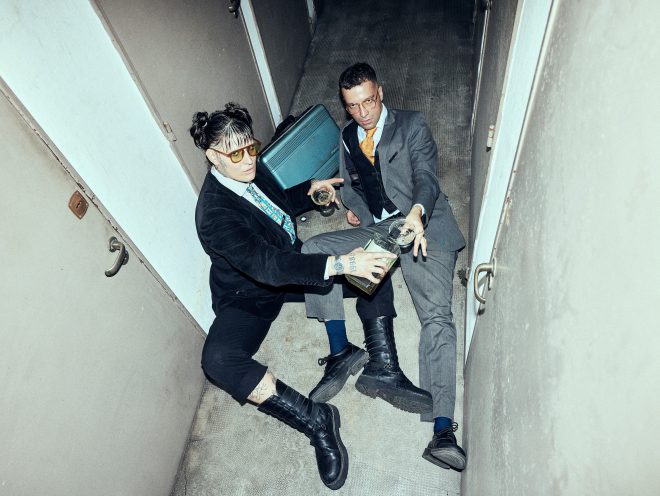
BOTOX FATAL
Valentina Spirito, who founded 999, performs at WHOLE this year as one half of BOTOX FATAL alongside Manu Calmet, a duo built on live improvisation and constant mutation across techno, house, trance, and drum and bass. For her, the relationship between founding a space and performing within it has always been natural. "Playing at 999 feels like being at home. It's a space I've grown alongside." BOTOX FATAL, she says, is now becoming part of the 999 family in the same way.
DJ Loui From Jupiter4, the Argentine producer and curator based in Berlin, arrived at his role as a bridge-builder deliberately. Through Jupiter4, Meta Rave, and Safada in Berlin, he has spent years making space for Latin American artists on European stages. His answer to the equality question is the most concrete of anyone in this piece. "Over the past five years, Latin America has emerged as a powerhouse of fresh talent, now in high demand across Europe, Asia, Oceania, and Africa. Local scenes are showcasing these artists, reducing reliance on costly European DJs." But the structural barriers haven't disappeared. "Touring Europe is still challenging for Latin American artists, due to the expenses of overseas flights and accommodation. However, every summer sees more of them breaking through those markets."
When he looks at the institutions he has worked with, like CTM Festival and La Machine in Paris, he sees something important happening but fragile. "Both CTM and La Machine Paris got it right by exploring electronic music as a global phenomenon, rather than a euro-centred one. Migration has given birth to every single subgenre we know today." The challenge, he says, is sustainability. The will exists. The funding structures to support it are still catching up.
The question this piece started with doesn't resolve cleanly. LATINEO says European validation is no longer the point. NSPERGER says reciprocity is the only thing that makes it work, and that the infrastructure for it already exists in the queer networks across Latin America. KVKN says both Berlin and Mexico City carry the weight of their own histories onto the same dancefloor, and neither one should be a mirror for the other. DJ Loui says something real has shifted, but the flights still cost what they cost.
What every collective agrees on is that the exchange is real and it is growing. It shows up in a LATINEO and Fiesta Dame event in Barcelona two weeks before WHOLE. It shows up in 999's visual world traveling with its scenography intact to Germany. It shows up in PERVERT, still nomadic in Mexico City, still building a refuge inside a city that keeps trying to shut the lights off, and taking that same steadfast resolve to Ferropolis.
WHOLE Festival runs July 17 to 20, 2026 at Ferropolis, Gräfenhainichen, Germany – and makes its Brazilian debut on 6th, 7th, and 8th of November in São Paulo.
