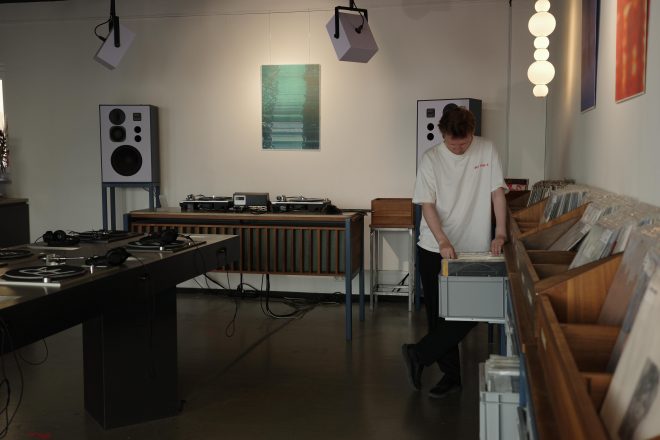


On our radar: Wittgenstein. The space between the records
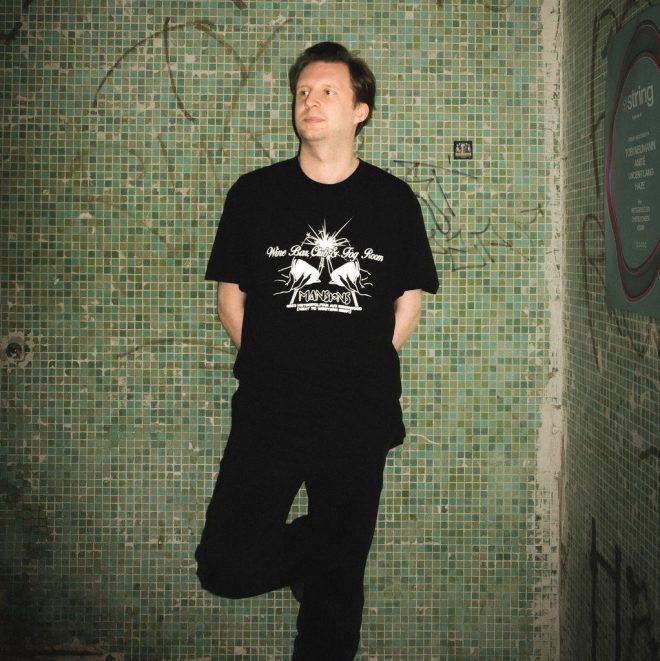
Across more than a decade spent between London’s club circuit, its listening bars and the studio, Wittgenstein developed a philosophy that treats music less as entertainment and more as a form of communication. Classical training, minimalist composition, house music’s cultural lineage and an enduring fascination with human connection all feed into an approach that values patience over instant gratification and emotion over spectacle.
That mindset comes into sharper focus with Deep Drive, his debut EP, a release that feels equally suited to a dark dancefloor, a pair of headphones or a quiet room. As his profile continues to expand beyond Munich with international bookings and new music on the horizon, Wittgenstein remains more interested in asking what music can make people feel than how loudly it can demand their attention.
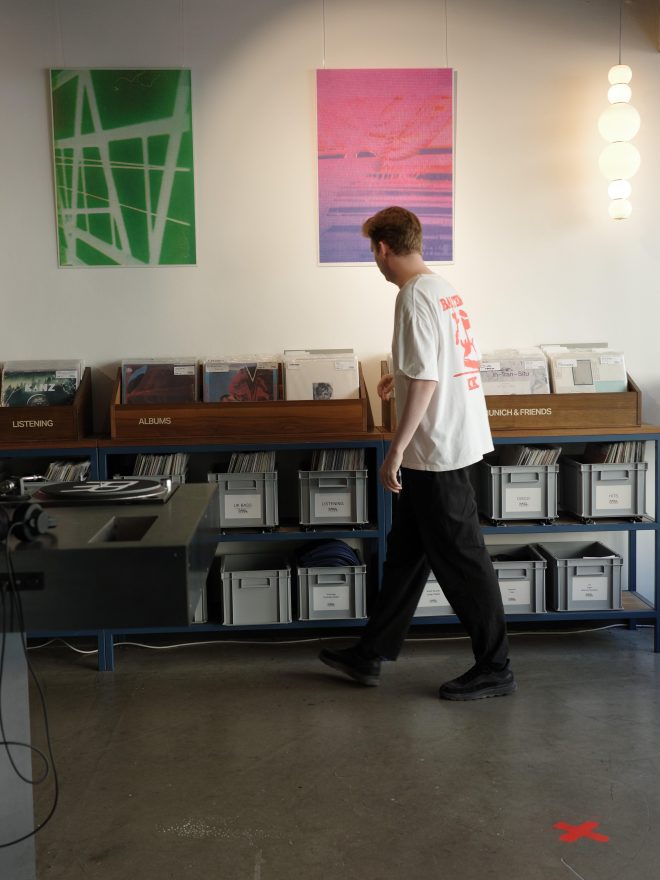
You spent more than a decade living in London. Looking back, what shaped you more: the city’s clubs or its listening spaces?
“Probably the listening spaces,” he says without hesitation.
“London taught me that electronic music isn’t one thing. One night I’d be inside Ministry of Sound, the next I’d be sitting in Brilliant Corners listening to records with complete focus. Studying Music History and Music Technology only reinforced that curiosity. I became obsessed with understanding where electronic music came from and the cultures that built it.”
He pauses before recalling a recent night at LEGAL in Munich.
“I watched two strangers spend hours dancing near each other before one record finally brought them together. That’s still what fascinates me most. DJing isn’t about playing music. It’s about creating moments where people connect.”
That idea of repetition appears throughout your work. Did classical music accidentally prepare you for electronic music?
“Completely.”
Rather than mentioning Beethoven or Chopin, he immediately references Steve Reich.
“Performing Piano Phase at school changed everything for me. Two pianos repeating almost identical phrases while one slowly shifts against the other. Some people probably found it frustrating. I found it hypnotic.”
That performance became less of an ending than a beginning.
“It was probably the first time I experienced minimalism. Piano taught me emotion. Drums taught me movement. Jazz, bossa nova and film music taught me that completely different ideas can exist together. Even today I don’t think about tracks. I think about narratives.”
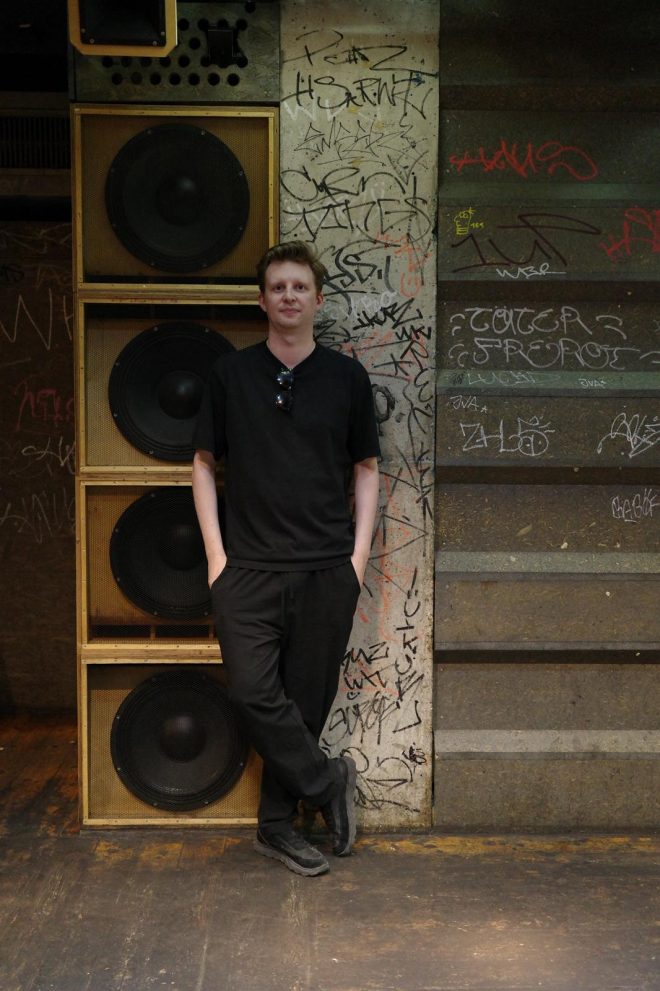
You’ve moved comfortably between peak-time clubs and listening bars. Are they really two different disciplines?
“Absolutely.”
“A club asks you to manage momentum. You’re constantly reading the room, deciding when to build tension and when to release it. Every decision happens instinctively.”
Listening bars, he argues, require almost the opposite.
“People aren’t there to escape into volume. They’re there to pay attention. Every transition matters because every detail is exposed.”
The difference, however, isn’t technical.
“Both environments remind you that music is never one-way communication. The audience is shaping the experience just as much as the DJ.”
Munich often exists in Berlin’s shadow. Why do you think the city deserves more recognition?
He smiles.
“People forget what happened here.”
The city that once housed Giorgio Moroder’s legendary Musicland Studios continues to quietly cultivate one of Germany’s healthiest independent ecosystems.
“You have labels like Ilian Tape and Public Possession, shops like Riviera Records, spaces like LEGAL. None of these projects exist because they’re fashionable. They exist because people genuinely care.”
Despite increasing economic pressure, he sees optimism.
“What’s special isn’t simply the music. It’s the openness. People move naturally between clubs, listening bars and community spaces. That curiosity keeps the scene alive.”
Your debut EP, Deep Drive, feels more interested in atmosphere than club functionality. Was that intentional?
“Every track begins with a feeling.”
Not a kick drum.
Not a bassline.
“Usually it’s connected to a place, a conversation or a memory.”
The three-track EP draws heavily from Ron Trent’s philosophy of creating music for the mind, body and soul.
“I hope people don’t only hear these tracks inside clubs. I hope they sit down with them, return to them and discover something different each time.”
Electronic music moves faster than ever. Algorithms reward visibility more than patience. How do you protect your own identity?
Before answering, he quotes Chuck Roberts.
“House music is a universal language.”
For Wittgenstein, those words remain less a slogan than a responsibility.
“Authenticity begins with respecting where music comes from. Its history, its communities, its culture.”
He doesn’t reject evolution. Quite the opposite.
“You have to keep changing. But trends disappear incredibly quickly. I’d rather spend years building something that still feels honest a decade from now than chase something designed to last a season.”
As his profile continues to grow through new releases, international bookings and an upcoming debut at UNUM Festival, it becomes clear that Wittgenstein isn’t interested in becoming louder than everyone else.
He’s more interested in making people listen.