


SLVL | DE 2026 #04
BEYOND THE VIOLENCE
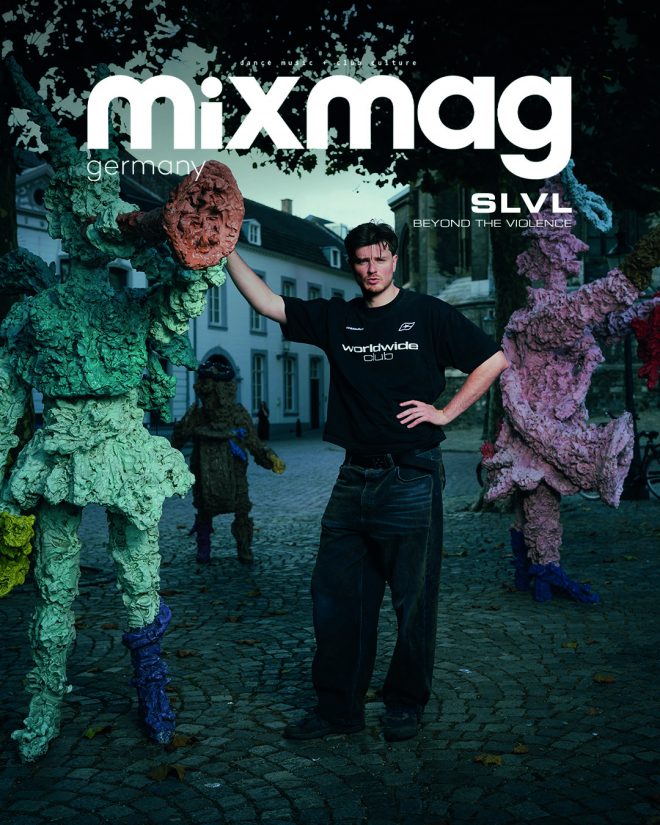
Maastricht moves at a useful distance from the machinery of European electronic music. There is a major club in the city, Complex, and a history of electronic music passing through it, but life outside those nights operates at another speed. For Stijn, the person behind SLVL, that distance has become part of the architecture. He leaves, plays to thousands, crosses continents, sleeps in hotels, moves through airports, then returns to a smaller Dutch city where things become ordinary again.
Almost nothing about SLVL sounds ordinary.
Since starting the project in 2022, Stijn has developed a strain of hard techno built around physical pressure: metallic kicks, exaggerated width, abrupt impact and a persistent desire to make things harder than they are supposed to be. There is severity in the music, but not much solemnity behind it. Sometimes, when a kick reaches precisely the unreasonable level he was searching for, he laughs.
That detail makes more sense once the name is explained. Senseless Violence sounds like a declaration. It began as an inside joke.
"Before I was an artist I went to raves, and one of my mates used to film all the drops and put 'senseless violence' in Dutch as the caption. This was so funny to me that when I had to choose a name as an artist, I was quick to go with that one. The deeper meaning is that the people around me are very important to me. My friends and family are what give me strength and a reason to keep going."
Some of his first tracks followed the same logic, named after jokes between friends or references to people around him. What eventually became a public identity was assembled from a private vocabulary.
That origin feels increasingly significant now that SLVL exists at a scale far removed from the group of friends who first understood the joke.
WHEN THE SCALE CHANGED
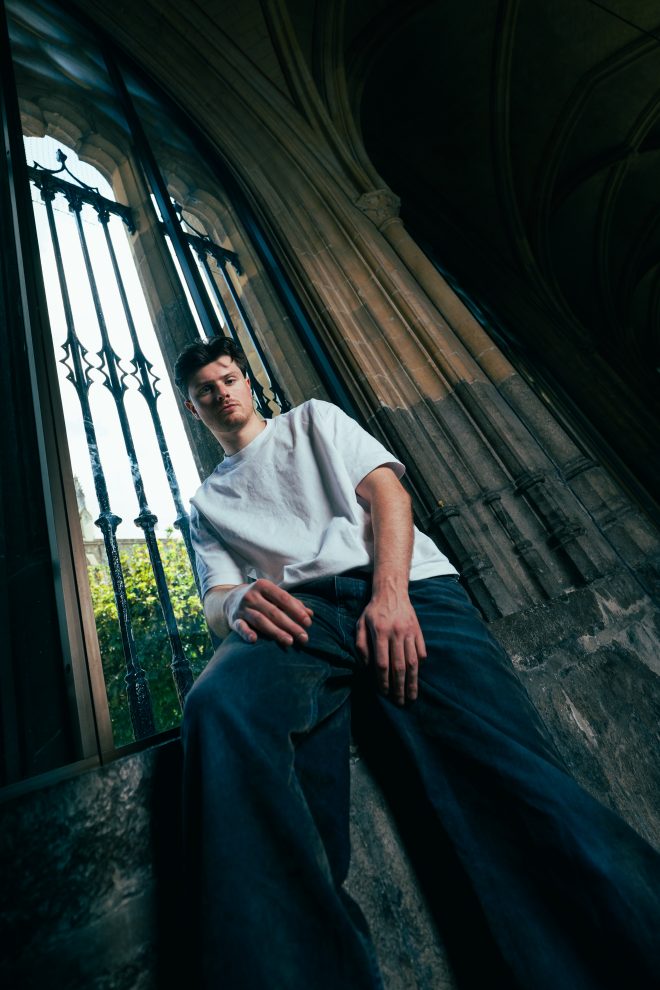
There are careers that accelerate so gradually that the artist only recognises the change retrospectively. Stijn can identify a more specific point. Rotterdam Rave Festival in 2025 shifted something. The significance was not only what happened during the set. It was what followed.
"There are a few key shows that I remember that felt like they put my career onto a faster trajectory. The main one was Rotterdam Rave Festival 2025. I remember a few weeks after this show that the bookings came streaming in and I realised that my genre and style were becoming very much loved. Around this time I knew that my productions had to be the best of the best because I wanted to be a pioneer of this sound."
Recognition introduced responsibility. If people were beginning to associate SLVL with a particular direction in hard techno, simply participating in that movement no longer felt sufficient. The records needed to justify the attention.
At the same time, the genre itself was changing around him. Hard techno had already begun moving beyond specialist clubs and warehouses into much larger festival environments. Scale creates its own pressures. Sounds become codified. Certain production devices travel faster than the culture around them. An audience that once needed to search for the music can encounter its most immediate characteristics in seconds.
There is a familiar anxiety in underground culture that accessibility inevitably means dilution. Stijn's position is less romantic.
"I don't think a genre can become bigger without becoming more accessible. Not enough people are going to become a fan when it's not as accessible, and that's okay. Many people are just not as involved in music or a genre as others."
He accepts the trade-off without pretending it does not exist. What concerns him more is what happens when the category that helped people discover an artist becomes the category they expect that artist to obey.
"I want people to enjoy SLVL the project, not the boundaries of the genre where SLVL might be part of at that specific time. I want people to see a new SLVL song and think, 'This will be a good one no matter what.' After all, a genre is only something to make it easier to find music."
STIJN IS NOT SLVL
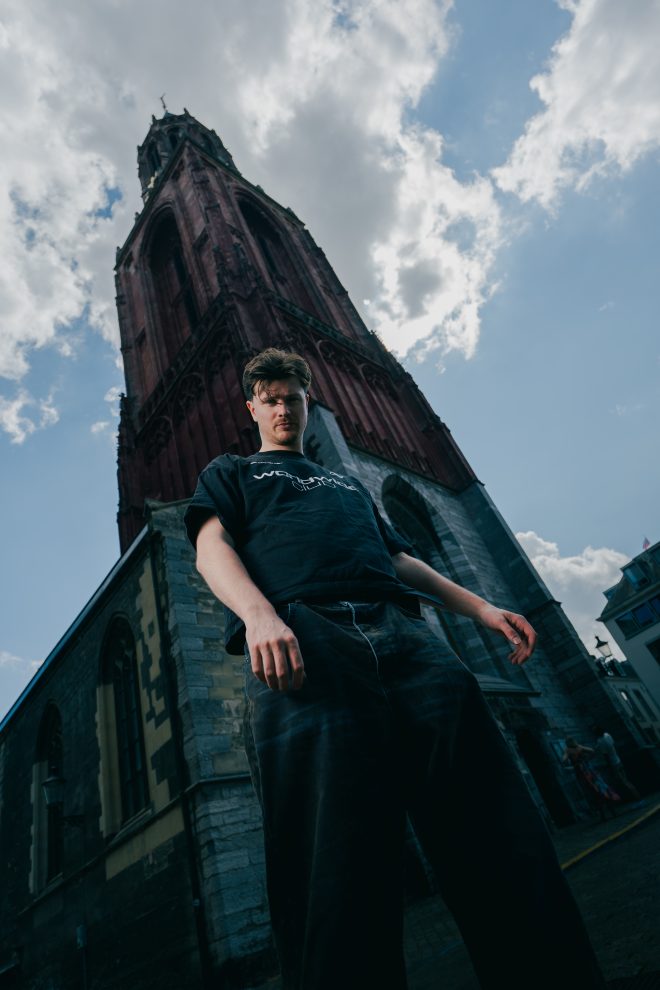
The most important boundary around the project is not musical, but personal. The visual language surrounding SLVL can feel severe and uncompromising. Stijn speaks about himself very differently. He has consciously maintained distance between the person standing behind the booth and the identity projected from it.
"SLVL and me, Stijn, are two different entities. My personality might show up a little in the SLVL project, but they are very different. This is something I consciously protect. In the beginning of my career I struggled a lot with how to deal with the praise of other people for what I'm doing. I did not know how to accept this praise without it getting to my head and making my ego too big."
There is something unusually lucid in recognising the problem before success has finished expanding. Contemporary DJ culture encourages almost complete overlap between artist and individual. Music, personality, appearance, backstage life and social presence can become parts of the same product. Attention rarely asks where the project ends.
"This is why I continuously separate SLVL and me as a person. I'm also just another person like everyone else. I'm not more special than my supporters because of what I do. In society we are quick to put people who do music on a pedestal and this can seriously mess with an individual. We are taught that fame and praise are a good thing, but it does not say anything about who you are as a person."
Complex was where Stijn learned about techno and hard techno as someone in the crowd. But living in Maastricht also meant learning what participation required when the party you wanted was somewhere else.
"We would travel three hours to go to Rotterdam Rave, for example. It gives me a certain type of respect for people who travel to see me. Maastricht is a smaller city where life moves a little slower. This gives me time to recharge and relax in between tours."
SOMETHING THAT STILL BELONGS TO THE ROOM
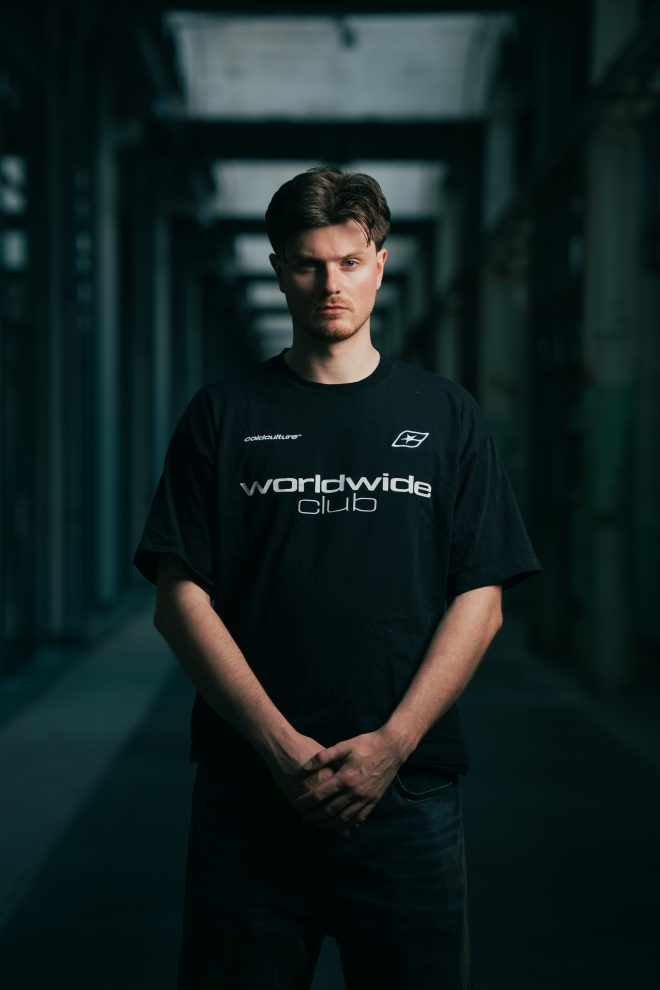
There is another kind of distance SLVL deliberately preserves: the gap between hearing a record and possessing it. A significant proportion of his sets consists of his own unreleased music. Some tracks remain there for months, moving between studio and club before appearing publicly.
In contemporary electronic music, that delay is increasingly conspicuous. A track can be filmed, uploaded, identified and circulated while the night that introduced it is still happening. The distance between the room and the internet has almost disappeared.
"Unreleased music is really important to me. It makes my sets special. You cannot find any other set like mine because I mainly play my own music, of which most songs are not even released. It also gives people an incentive to come to my set and it might give them the feeling of truly experiencing something special."
"I remember the first few times I went to raves and was trying to find track IDs and finding out they were unreleased. It made me want to go to raves even more to experience this unique feeling. Creating and attending an exclusive experience is a feeling that is hard to find nowadays."
The point is not exclusivity as status. It is the temporary impossibility of replay. For a short period, the only way to experience that music properly is to have been there. The same rooms then become laboratories. SLVL releases independently at roughly one track per month, but a record he considers finished in the studio can change once it encounters a crowd.
"I make my tracks with the crowd in mind. If the crowd reacts poorly I might want to change up the track to make it hit differently. But then again, not all tracks are absolute crowd pleasers, and that's okay."
That final qualification matters. Testing music against a dancefloor does not mean surrendering every decision to it. A crowd can tell him that something is not working. It cannot tell him what every SLVL track should become. Then, there are records where the audience response becomes so large that the relationship reverses. The Last Airbender (VIP) did that. Its "Appa Yip Yip" moment became immediately recognisable, eventually outperforming everything Stijn had previously released. A record made by SLVL became a record that audiences expected from SLVL.
"It absolutely changes your relationship with the track. It becomes something you almost have to play. I'm okay with that because I am proud of what I made, but sometimes it gets a little boring. This track did so well that it outperformed everything I've done. I could try to chase something similar, but this is impossible and will only give me writer's block. If anything, this has taught me to not look at the numbers too much and make whatever I like myself."
Success, in that sense, becomes useful only when it stops dictating the next record.
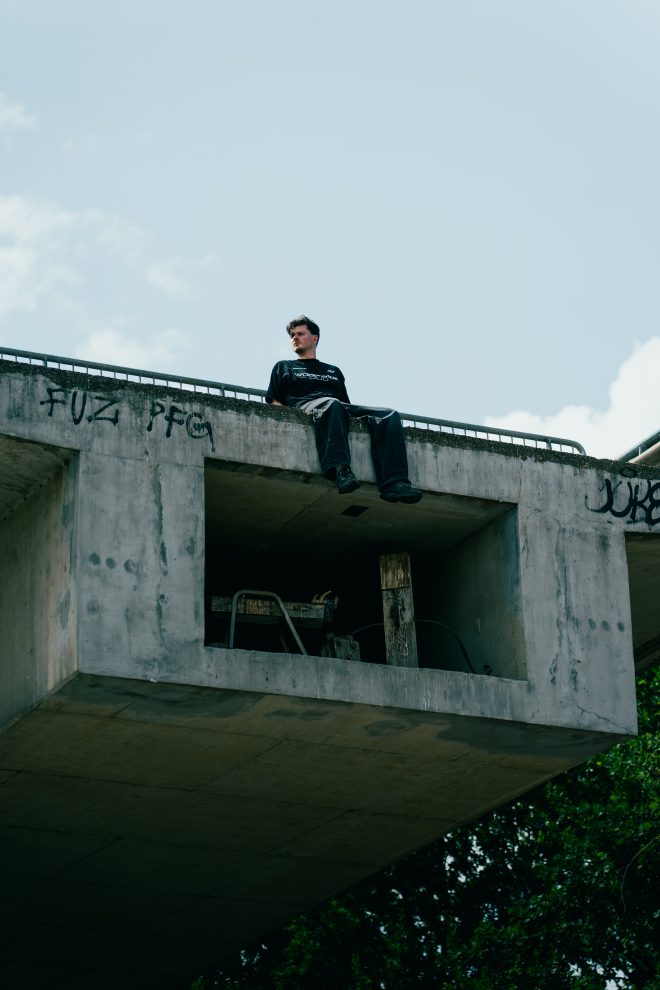
MAKING THE KICK WRONG
The kick has become one of the recurring signatures of SLVL's catalogue, but its development began with a simple dissatisfaction.The kicks Stijn heard when he started producing were not hard enough.
"The whole philosophy behind my kicks is that I thought the kicks being played when I started out were not hard enough, so I wanted to make them harder. Online information gives you a set of rules in music production and I quickly realised that I have to break them to achieve the sound that I wanted."
Those broken rules eventually became part of the identity, he describes the target in physical rather than technical language.
"In my kick creation I'm searching for a very harsh, powerful, almost metallic sound that is very wide. I'm looking for something that makes me feel like, 'Hey, this is brutal.' Most of the time I'm actually laughing because it's so hard and harsh that it's just funny to me. You can see me laughing like that during my sets as well."
From the outside, SLVL can appear built around aggression. From inside the studio, some of its most extreme moments come from amusement. He pushes the sound until severity becomes absurd, then knows he has found something interesting.
The personality Stijn keeps separate from SLVL slips through anyway.
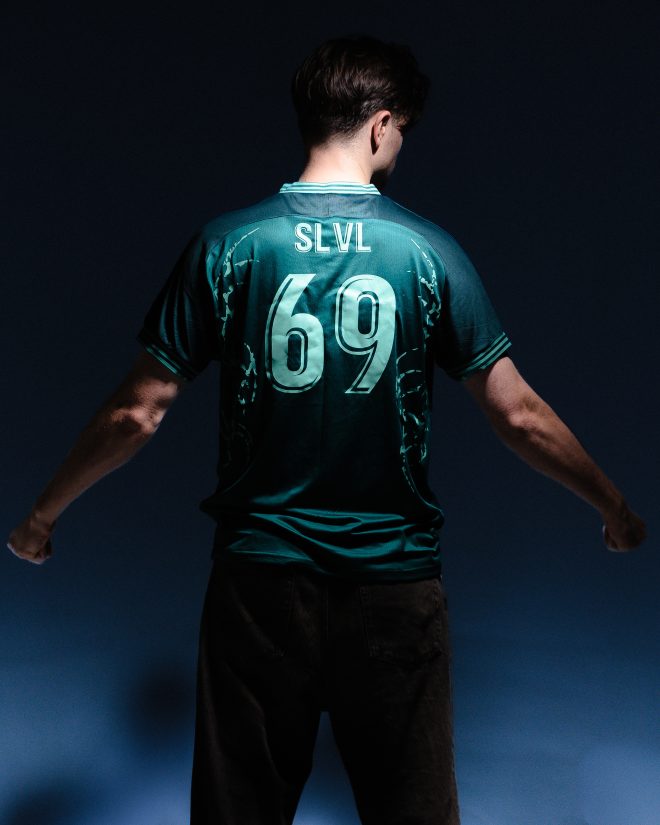
THE PART BETWEEN THE SHOWS
In 2026, SLVL has travelled through Asia, North America, Australia, South America and Europe. Written as an itinerary, it looks expansive. Experienced consecutively, the world can become considerably smaller.
Hotels. Airports. Cars. Booths. Then another airport.
"There is no place like home. Travelling the world and being at a lot of places while being jetlagged and playing late hours is very tough. You mainly see hotels and airports. This is a side of DJing most people miss because it's not a highlight on Instagram. Sometimes I yearn for a slower life with more routine. This has taught me that I have to create my own routine and try to stick to it closely."
"I do, however, understand that seeing the world while getting paid for it is such a blessing. It is something not a lot of people get to do and I am truly blessed to be able to do this. It's the duality of these things that messes with my head, and I think every DJ will face it at some point."
That contradiction is more revealing than either version alone. He can be grateful and exhausted. The privilege does not remove the instability; the instability does not erase the privilege. Travelling has also dismantled the idea of a universal SLVL crowd. A record thatproduces immediate recognition in the Netherlands can land differently thousands of kilometres away.
"Every crowd has a different understanding of my music. Crowds overseas are less involved in my whole catalogue and might only know the hit songs, while crowds in NL know a song I've played once. When I play the first track I usually know how a set will go. If the people are hyped and excited and know the song, the set is going to be high energy and there will be a lot of crowd interaction. If the people are standing still or not really reacting, then I know my sound is not made for this night. Luckily this does not happen too often."
There is no elaborate theory of crowd control behind it. The first record asks the question. The room answers.
Longer sets let him ask different questions. At his All Day Long at Maassilo, Stijn could move away from the compressed logic of the festival set and trace his own relationship with hard techno instead.
"I love sets like this. I play a set that goes through my journey of hard techno, from back when I started listening to it to now. These sets show a different side of me that people don't know. For example, that I love schranz."
That different side may become increasingly relevant.
WHAT HAPPENS AFTER THE DEFINITION
For an artist whose rise has been closely connected to hard techno, the obvious route would be to consolidate the sound while attention remains high. Stijn appears more curious about what happens when the category begins to loosen.
He is not talking about abandoning intensity. The changes he describes are smaller and potentially more consequential: melody, stranger kicks, trance elements, sounds that might previously have felt outside the accepted perimeter of SLVL.
"I might make something more melodic, try out more weird kicks or put in more trancey sounds, as I've been doing recently. Genres are there to make it easy for you to find what you're looking for. They're not there to restrict an artist in what they want to make."
It returns the conversation to something Stijn has been trying to establish beneath the acceleration of the last two years. SLVL cannot depend indefinitely on people wanting the same version of SLVL.
The audience matters. He builds tracks with the room in mind, tests them there, remembers travelling hours to stand where his supporters stand now. But respect for an audience and obedience to it are different things.
Rotterdam Rave changed the velocity of the project. The Last Airbender (VIP) showed him how far one record could escape his control. International touring revealed how differently the catalogue is understood once it leaves the Netherlands. None of those experiences offers a reliable instruction for what should be made next.
Perhaps that uncertainty is useful. Stijn can return to Maastricht, where life still moves slowly enough for the distinction between person and project to survive. SLVL can remain somewhere less settled.
The name came from a joke between friends. The kicks came from deciding that existing ones were not hard enough. The next phase may come from another refusal to accept the boundaries already in place. The rooms have become larger. The distance travelled has become greater. Now the sound has somewhere else to go.
