


Tom Trago rewires the system with his new album “ignorance”

Tom Trago does not view the dancefloor as a fixed destination; instead, he regards it as a dynamic space shaped by context, instinct, and an ongoing negotiation between control and surrender. Throughout a career that has consistently resisted straightforward categorization, his work has traversed house, electro, and more abstract electronic forms while maintaining a distinct sense of authorship. Ignorance emerges at a point where this trajectory appears both consolidated and disrupted, representing a record that turns inward to expand outward. The album is constructed through reduction, deliberate isolation, and a renewed engagement with process that emphasizes intuition over excess. The result is not merely a new chapter, but a reframing of Trago’s creative philosophy, where limitations become generative and clarity is achieved through subtraction.
Ignorance represents not only a shift in sound but also a recalibration of creative process, grounded in spatial withdrawal, technical limitation, and a renewed emphasis on authorship. The album originates from a conscious detachment from the overstimulated environment of contemporary production, with its creation relocated to rural France, where both technological and social absence serve as compositional tools. In this context, artistic creation is no longer mediated by constant connectivity or external obligations, but instead unfolds within a focused cycle of intention and execution. The resulting work is structurally focused and emotionally distilled, shaped as much by exclusion as by inclusion. Rather than serving solely as a stylistic pivot, Ignorance should be interpreted as a methodological statement that foregrounds constraint, isolation, and selective input as central to artistic development.
“One of the things is that there is no phone coverage at that location, which just kinda puts you in a bubble, just with the equipment and your ideas. Also, all other daily things like shopping, bringing kids to school and taking care of other business is not distracting me. Other than that, I think I have to choose which equipment I'm gonna work with. Because I have quite a basic setup in France, I brought a few essential machines from the studio in Alkmaar. This really shapes the sound and adds limitations, which I think are really good for creation. Bringing a few selected records with me to listen to really helps. It kinda creates a focus or tunnel vision that, for this project, was obviously more in the direction of electro/home electronics.”

This self-imposed limitation extends beyond geography to the technical architecture of the album, where reduction serves as an epistemological framework for decision-making. Trago’s approach challenges the assumption that increased access to tools enhances creative output, instead suggesting that excess can undermine clarity. By narrowing his palette, he prioritizes instinctive evaluation, allowing ideas to be assessed quickly without the interference of overproduction. This methodology establishes a hierarchy in which conceptual strength takes precedence over technical refinement, positioning execution as secondary to the immediacy of the initial creative impulse. In this way, Ignorance aligns with a tradition of electronic practices that value economy, precision, and intentionality over abundance.
“I strongly believe that limiting and reducing actually increases creativity. I noticed that the number of options that I have in the studio in Alkmaar does not make creating or making hard choices easy. Most of the time, an idea is good or not, and the execution is secondary.”
The album’sidentity is further clarified through its explicit engagement with electro as both influence and framework. From its inception, Trago articulates a conscious intention to construct a work that dialogues with foundational figures such as Kraftwerk, Cybertron, and Drexcia, situating Ignorance within a historically grounded continuum. This decision is not merely referential; it informs the album’s production ethos, particularly in its rejection of sampling in favor of fully performed compositions. Such a choice signals a return to authorship, emphasizing embodiment and control over sonic material. The integration of high-technology equipment reinforces this orientation, facilitating a cleaner, more deliberate articulation of form that contrasts with the warmth and imperfection often associated with lo-fi processes.
“I clearly made that choice from the very first beginning. I always wanted to tribute one of my albums to the ones that influenced me on a more electro level, like Kraftwerk, Cybertron, or Drexcia. I chose not to sample but to play everything, and use more hi tech equipment then lo-fi stuff. When making the track selection had a strong believe and vision that this album should be something else (for me mostly). This vision was supported by working with Tom Ruijg as an engineer and Rocky van Jaaren as co-writer on the recordings of some of the songs. We together shared the vision of this album.”
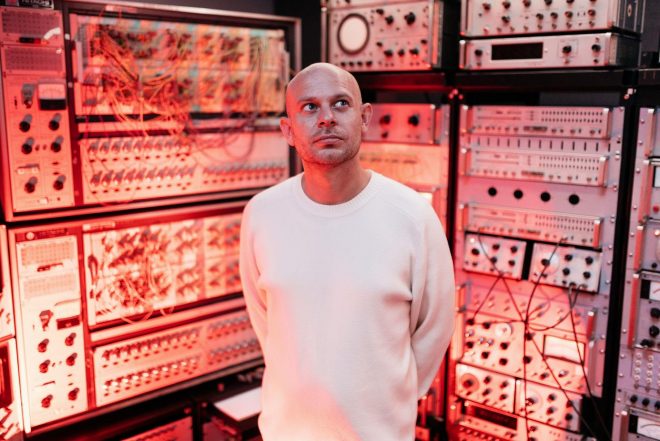
Within this framework, Dutch electro heritage serves as both a structural reference and a site for reinterpretation. Trago’s longstanding association with artists such as Legowelt, Bas Bron, and the broader Clone Records community informs the album’s tonal direction, embedding it within a distinctly regional lineage. However, this engagement does not result in mere replication; instead, these influences are filtered through Trago’s unique compositional sensibility. The outcome is a hybrid form in which historical resonance coexists with individual expression, producing a sound that acknowledges its origins while asserting its autonomy. In this way, Ignorance contributes to a broader cultural process of continuity and transformation within electronic music.
“It is definitely a sound that always inspired me. From the likes of Legowelt, Bas Bron and the whole Clone family. Of course when I touch it it becomes a bit of tragonised, but yes, this heritage is something I was very much into when writing this album.”
The spatial conditions of recording in Alkmaar further reinforce the album’s aesthetic orientation by introducing an architectural dimension to its sonic character. Utilizing a former factory as the recording environment provides not only visual and historical context but also shapes the affective qualities of the music. The industrial features of the space, including its scale, materials, and embedded histories, guide the music toward colder, more atmospheric textures. This interaction between environment and musical output highlights the extent to which Ignorance is shaped by its physical surroundings, elevating the role of space from a passive backdrop to an active participant in the creative process.
“Well, the architectural vibe of the building is really industrial and ‘electro’ I would say. By this it supports a more cold and dreamy sound then for instance warm & soulfull. Being around the old electro heads and their legacy kinda pulled me towards that direction. Alkmaar used to have a strong electro scene back in the days!”
Collaboration emerges as a critical vector in the album’s development, particularly through Trago’s engagement with Dexter, whose contribution operates at both technical and conceptual levels. Initially motivated by a perceived disparity in drum programming, this partnership evolves into a dynamic exchange of ideas characterized by speed, intuition, and mutual responsiveness. The process of “ping ponging” tracks reflects a decentralized model of authorship, where the work is shaped through iterative dialogue rather than singular control. At the same time, this collaboration facilitates a shift in Trago’s role, allowing him to assume a more expansive, curatorial position within the project. This transition culminates in his characterization of the album as a Gesamtkunstwerk, a total artwork constructed through the integration of multiple creative voices.
“I started reaching out to Dexter when most of the melodies got written (in France), but I noticed that my drums were weak compared to his productions. I have always been a fan of his music and style and wanted my music to have the same sort of impact. I was trying to copy his style until my friend and co-writer of the album, Rocky van Jaaren, advised me to just call him and ask for help. Dexter was surprisingly open and enthusiastic and offered me his time and skills. We started ping-ponging tracks and ideas, and the album came together very naturally. What also helped is that he, just like me, works fast and intuitively. What he brought up in me is being more of an executive producer and not being so microfocused. For me, this album is truly a Gesamtkunstwerk, in which I sat much more in the executive producer chair for the first time and worked with people like Stefan Schmit, Dexter, Tracey, Rocky van Jaaren & Byron the Aquarius, where everyone did what they excel at. In this way, it is truly a collaborative effort.”
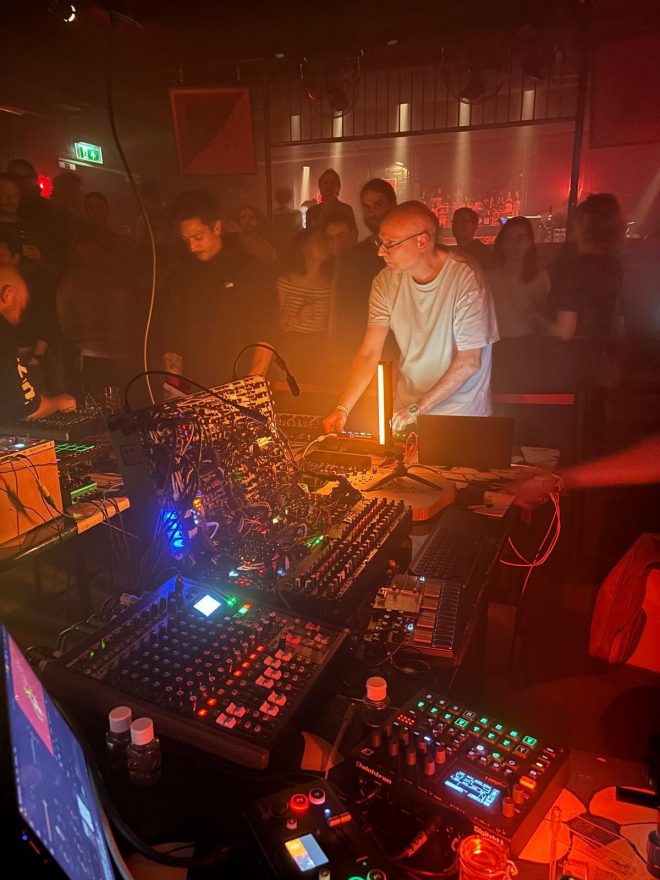
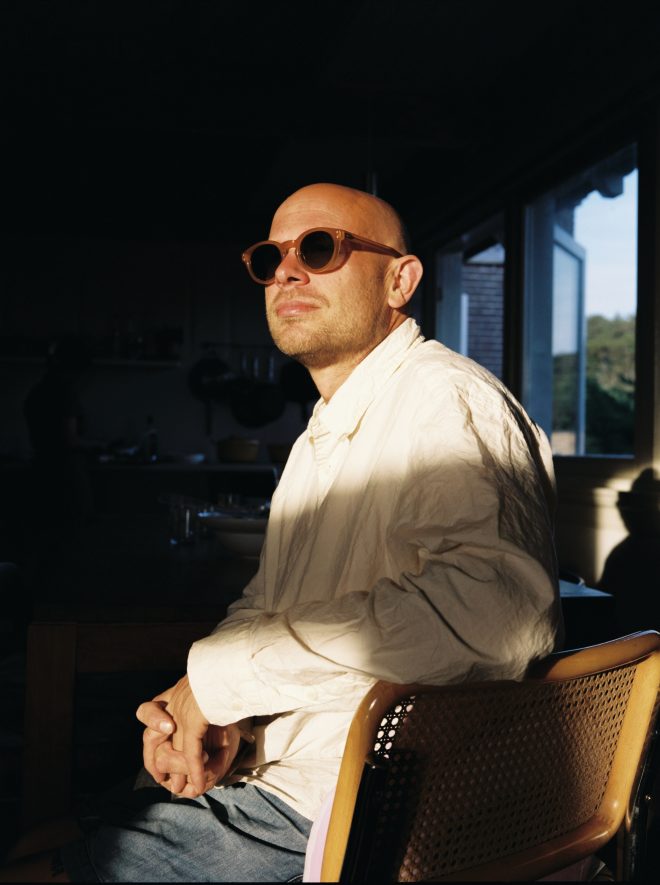
The conceptual weight of the album is crystallized in its title, Ignorance, a term that operates across personal, cultural, and philosophical registers. Rather than presenting itself as a didactic statement, the title emerges intuitively, reflecting both Trago’s internal process and his perception of the contemporary moment. Its ambiguity allows it to function as a flexible interpretive frame, accommodating multiple readings without collapsing into a singular meaning. This openness aligns with the album’s broader methodological approach, where intuition and immediacy take precedence over rigid conceptualization. As such, the title becomes less an explanation than an extension of the work’s underlying logic.
“It, for me, describes my workflow, the time we are in now, and the way we treat the world. It came across very natural, and I didn’t have to think twice about it.”
At the emotional core of Ignorance, specific tracks such as Sadari and Undertaker articulate the album’s internal tensions with particular clarity. These compositions, among the earliest produced, establish a tonal and affective blueprint that informs the rest of the project. Their interplay of melancholic and aggressive elements encapsulates what Trago identifies as a state of “positive sadness” intertwined with “destructive energy.” This duality functions as a central organizing principle, shaping both the emotional resonance and structural dynamics of the album. Through these tracks, the listener gains access to the psychological landscape that underpins the work, revealing its most intimate dimensions.
“Sadari and Undertaker are really the tracks that form the essence of the album. They were the first to come out of the sessions I did for this album. They both have the aesthetics that I was looking for when writing this album. They carry a certain positive sadness and destructive energy that perfectly fit me at that time.”
This tension between control and fluidity extends into the album’s forthcoming live translation, where performance becomes an extension of its conceptual framework. Rather than reproducing the record in a fixed format, Trago envisions a mutable structure defined by live instrumentation, real-time manipulation, and spatial adaptability. The inclusion of collaborators such as Dexter and Rocky van Jaaren introduces additional layers of interaction, transforming the performance into a collective act of reconstruction. By incorporating vocals and emphasizing a band-like dynamic, the live show seeks to dissolve the boundaries between electronic and physical performance. In this context, Ignorance evolves from a recorded artifact into a living system, capable of continuous variation.
“We are definitely looking for a live feel, so lots of real machines, live played synths, and a structure that can change according to the place we play at. Rocky van Jaaren is joining us on stage for live FX. I am doing some more vocals than normal, so it will be more of a band feel than an electronic laptop set.”
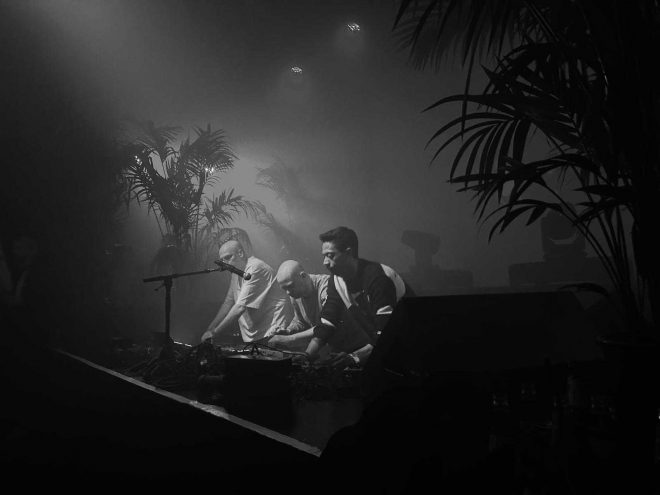

The album’s significance lies in the new trajectory it establishes within Trago’s practice, one defined by openness, experimentation, and a reengagement with instinct. After an extended period away from a fully dancefloor-oriented format, Ignorance functions as both a return and a departure, reconnecting him with foundational impulses while simultaneously expanding their possibilities. The project introduces a mode of working that resists premature definition, allowing ideas to develop organically over time. This orientation suggests a future in which process takes precedence over product, and exploration becomes the primary driver of artistic evolution.
“I really like the fact I can now totally experiment and see where the creative juices flow.”
In the end, Ignorance does not seek resolution as much as it affirms a state of continuous becoming, where clarity is provisional and movement is essential. What Trago constructs here is less a definitive statement than a framework for ongoing exploration, one that privileges instinct, collaboration, and restraint as guiding principles. The album reframes his position within electronic music, shifting him from a producer of tracks to an architect of processes, in which each decision carries both technical and philosophical weight. This renewed orientation suggests a future that remains deliberately open, resistant to fixation, and driven by curiosity rather than expectation. In that openness, Ignorance finds its true coherence, not as an endpoint, but as a precise moment of alignment between artist, method, and intent.
