


Dea Magna: Finding The Frequency
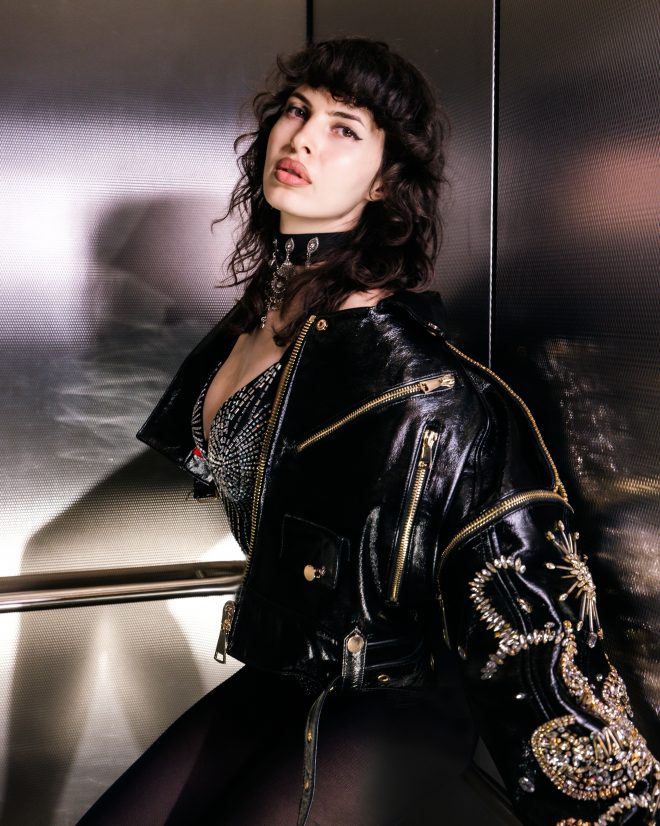
Growing up in Serbia during the years that followed the war, certainty carried a different weight. Stability wasn’t simply a personal ambition but something families worked to rebuild, often placing practicality above everything else. For Dea Magna, music existed alongside that reality from an early age. Classical piano became the language through which she understood the world, yet adulthood seemed to demand a different future, one measured less by expression than by security.
Only later would she realise those two paths had never really been separate. What first appeared to be a succession of different lives, pianist, economics graduate, techno producer, label founder, now feels more like the gradual removal of everything that stood between her and the person she already was. Across our conversation, music emerges less as a profession than as a way of making sense of identity, community and belonging, a thread connecting childhood memories in Belgrade with dancefloors in Berlin, Amsterdam and Los Angeles, where freedom became something to be built rather than found.

“Growing up in post-war Serbia, stability was valued above all else, as a way of holding on to a sense of control after the country had fallen apart. Music became the first place where I felt free. I started playing piano when I was six years old. Classical music became the language through which I understood the world.”
After twelve years of classical training, economics felt like the safer choice.
“My parents encouraged me to study economics because it offered a future that felt more certain. We sold our family piano to help pay my university tuition. I remember watching strangers carry it out of the apartment and feeling as though I was watching an entire version of my future disappear. But over time, I found my way back to the one thing that had always made me feel most like myself: music”
Today, she doesn’t see becoming an artist as an act of rebellion.
“It was an act of self-preservation. My understanding of safety completely changed. I realized that avoiding uncertainty doesn’t necessarily protect you. Sometimes the greatest risk is building a life that pulls you further away from yourself.”
The same idea runs through her relationship with music. Rather than moving from classical training into electronic music, she eventually realized both worlds were always speaking the same language.
“For a long time I thought that I was living two separate musical lives. One belonged to the conservatory, where I was learning harmony and composition. The other belonged to dark clubs and warehouses. Classical music taught me discipline. It taught me that emotion becomes much more powerful when it’s supported by structure. Electronic music taught me that sound can be a vehicle that shapes our relationship with ourselves and others.”
“Even when I’m producing techno, I’m thinking about harmony, tension and composition as much as rhythm. To me, those two worlds were never contradictory. One taught me how music is built. The other taught me why people need it. Everything I make today lives somewhere between those two ideas.”
Whether she’s behind the decks or incorporating live elements through her Akai workstation, that dialogue between structure and spontaneity continues to shape the way she performs.
If music became her language, the dancefloor became the place where its meaning expanded.
“I think people often describe club culture as escapism, but that never fully resonated with me. Escaping implies that real life exists somewhere else. Some of the most honest moments I’ve experienced have happened on dancefloors.”
One memory remains especially vivid.
“Miss Kittin was playing, and among all the artists I saw during those years in Belgrade, she stood out because she approached electronic music without the sense that genre boundaries had to define her. Beyond her artistry, the memorable thing was that she was a woman. Growing up in Serbia, I rarely saw women occupying roles like hers. Watching someone like Miss Kittin command a room so naturally made me realize that representation isn’t symbolic. It expands what’s imaginable. I didn’t have the language for it then, but looking back she gave me permission. Belgrade taught me resilience and community. Berlin taught me the importance of preserving a culture. In Los Angeles, I found my artistic freedom, and Amsterdam feels like a natural intersection where all these worlds collide. What these places have in common is their transformative dancefloors.”
TRUSTING THE SIGNAL
Finding that voice also meant learning to trust instincts that hadn’t always been understood.
“When I first started performing my own productions, I built live sets around Ableton Push, synthesizers and improvisation. Some club owners in Serbia told me I was "too Berlin for Belgrade." They felt my live elements and emphasis on melody didn't fit what local audiences expected from techno. So, for a while, I drifted towards house. Moving to Los Angeles brought me back to techno. I found a scene that was more open to crossing influences and less concerned with genre boundaries.
Meeting Reinier Zonneveld around that time felt symbolic. I'd finally started making music that genuinely sounded like me, and he heard something in those records before I fully trusted it myself. He began supporting them in his sets, and eventually we collaborated. Watching Okano, a track built around traditional Balkan vocals, connect with audiences around the world reminded me that the things that make us unique are often what people connect with most deeply.
Today, my music lives somewhere between hypnotic grooves, industrial energy and trance emotion. Listening back to my earliest techno sets, I'm surprised by how close they are to what I'm playing today. The BPM is faster and the grooves are heavier, but emotionally I'm still chasing the same feeling.”
That sense of alignment became even clearer after discovering she was autistic later in life.
“Finding out I was autistic allowed decades of experiences to suddenly make sense. It helped me understand my relationship with music, including the intensity with which I obsess over it, why I developed perfect pitch, why I could happily spend six hours refining a sound most people wouldn’t consciously notice, or listen to the same track a thousand times without ever getting tired of it. Layering multiple tracks together during a DJ set, or improvising with live elements, doesn’t feel like adding complexity. It’s simply an expression of how my mind already works.”
The diagnosis also reshaped the way she understood herself beyond music.
“For a long time I assumed I needed to become more spontaneous or more comfortable in social situations. I couldn’t understand why things that seemed very easy for other people required so much conscious effort from me. Understanding how my mind works changed the standards I was measuring myself against. It also broadened the way I think about other people. That’s probably one of the reasons why I care so deeply about creating spaces where different kinds of people can feel like they belong.”
That philosophy extends naturally to the dancefloor, where she thinks less about impact than about creating the conditions for people to experience something lasting.
“I often think about Neil Postman’s idea that every new medium changes what society values. We still tell ourselves we’re making music for dancefloors, when increasingly, we’re making moments for phone screens. I want to resist that.”
She focuses on the emotional architecture of a set, allowing groove, tension and long transitions to gradually reshape the room before introducing moments of lyrical clarity.
“These days I’m naturally drawn to groove-forward records that leave space for tension, emotion and momentum to unfold. I’ve also come to favor long, fluid transitions, layering three or four tracks until the boundaries between them disappear. The result feels familiar enough to trust, yet unexpected enough to keep people open to wherever the music wants to take them. That’s when I like to introduce lyrics as small emotional interventions. Whether they’re celebrating female confidence, questioning social norms and expectations or encouraging people to trust themselves a little more, I’m looking for moments that resonate beyond the dancefloor. I believe that music has the power to impact the way people feel about themselves for an evening. If someone walks away from my set feeling a little freer, a little bolder, a little more seen, or simply more open to who they are or who they might become, then the music has done what I hoped it would.”
UNDERDOGS
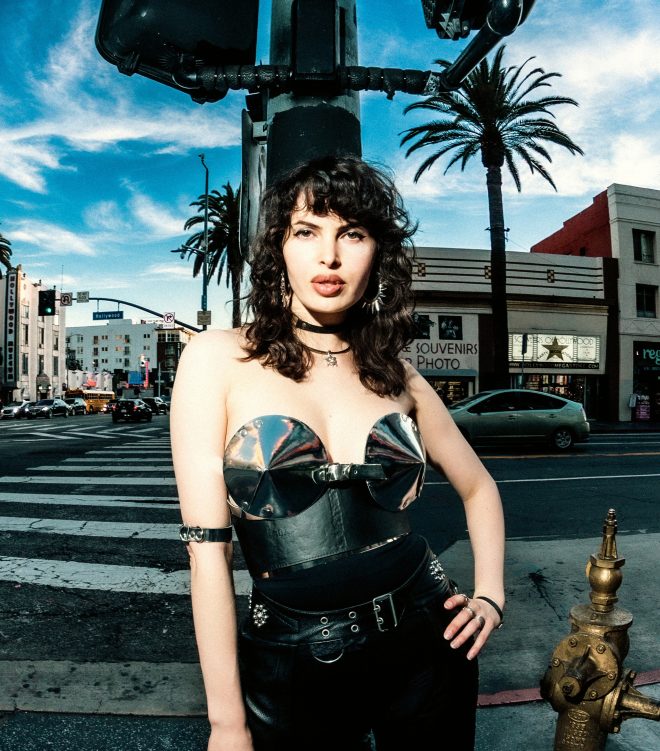
That idea of belonging now extends beyond her own music. The launch of Underdogs Records feels less like the next step in a career than a natural continuation of everything that has shaped it.
“One of the most meaningful parts of this journey has been hearing from young women who told me that watching my career unfold gave them the confidence to start making music themselves. Those messages reminded me that sometimes all it takes is seeing one person do it to expand what we believe is possible.”
For Dea, inspiration is only the beginning.
“One artist can inspire someone. A community can sustain them. That’s why I hope for Underdogs Records to become a community, where artists who’ve spent their lives feeling like outsiders can find one another, support each other and grow together.”
The label is built around a simple idea: that originality often begins on the margins.
“It’s for the people who’ve been told they’re too emotional. Too strange. Too feminine. Too different. Too melodic. Too loud. Too much. Women. Queer artists. BIPOC artists. Neurodivergent artists. Producers from small towns. Immigrants. Anyone who’s ever felt underestimated, or like they haven’t received a map everyone else was given. I want the label to reflect the same belief that’s guided my own career, that artists do their best work when they stop trying to fit existing molds and start trusting what makes them unique. The older I get, the less interested I become in asking whether something is going to be successful, and more in making sure it feels honest and meaningful. It’s become the filter I use for everything else.”
The next chapter continues that search, including a forthcoming collaboration with Culiner for Insomniac’s Mutate imprint, a project that brings together two very different musical backgrounds through a shared interest in composition and experimentation.
“At the heart of all of this is one belief I’ve come to trust. I believe in the power of the human mind to create lives where we can feel deeply aligned with who we truly are. This starts with understanding ourselves and what drives us. From there, community becomes the force that helps us keep moving toward that version of ourselves. I hope my life’s work can encourage other people to discover more of what’s possible within themselves.”

MY THOUGHTS
One of the things that stayed with me after speaking to Dea Magna wasn’t a particular achievement or career milestone, but the consistency of her thinking. There is very little separation between the artist and the person. The themes that define her music, identity, belonging, curiosity and emotional honesty, also shape the way she speaks about life. She never presents herself as someone who has all the answers. Instead, she seems genuinely interested in asking better questions, whether about creativity, community or the way people relate to themselves. In an industry that often rewards certainty and image, that quiet self-awareness feels surprisingly rare.
What also stands out is her generosity. Throughout our conversation, success rarely appeared as an individual pursuit. Almost every reflection eventually returned to other people: the artists who inspired her, the communities that shaped her, or the spaces she hopes to create for those who have never quite felt they belonged. There is an openness to the way she sees the world that extends well beyond music. It suggests an artist who understands that influence isn’t measured only by records or performances, but by the confidence others gain simply from seeing someone embrace who they are without apology.
