

HANAA | DE 2026 #02
Staying with the feeling

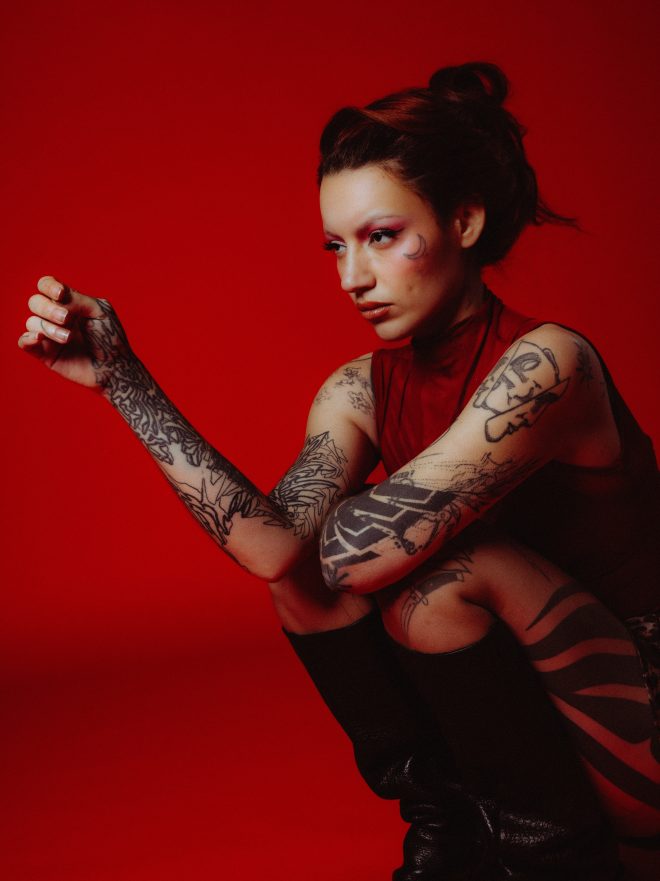
There is a clarity to the way HANAA occupies space now. Not loud, not defensive, but deliberate. Formerly known as La Penderie Noire, her decision to step forward under her birth name marked a turning point that runs deeper than branding or aesthetics. It was a recalibration. After years spent refining her sound away from the spotlight, the shift signalled a moment of alignment between identity and output, between the private process and the public presence. HANAA emerges not as a new artist, but as one finally standing in full view of her own work.
Musically, her evolution has crystallised into a high-velocity language that balances emotional weight with physical drive. Working predominantly between 148 and 155 BPM, her sets and productions draw on the trance lineage while folding in elements of hard house, groove, pop, and club-focused immediacy. What distinguishes the result is not speed for its own sake, but control: fast music that remains open, melodic, and lucid. Her tracks are built around strong emotional leads, hooks, and repeated phrases that feel closer to mantras than drops, transforming intensity into something immersive rather than abrasive. It is music shaped by lived experience, where survival instincts are translated into structure, rhythm, and release.
This interview traces the path that led her here. From a childhood shaped by restriction and adaptation, to the role electronic music played as a private escape long before it became a public platform. HANAA speaks about reclaiming her name, about the studio as a site of confrontation and care, about the tension between emotional honesty and an increasingly commercialised scene, and about the responsibility she feels when holding a room for hours.
As she prepares to take her REBIRTH: All Night Long Tour across Europe and enter a defining year of releases and visibility, what emerges is not a manifesto, but an invitation. One extended to the listener, the dancer, the reader: to step inside the music, stay present, and move forward without needing everything to be resolved.
Becoming visible
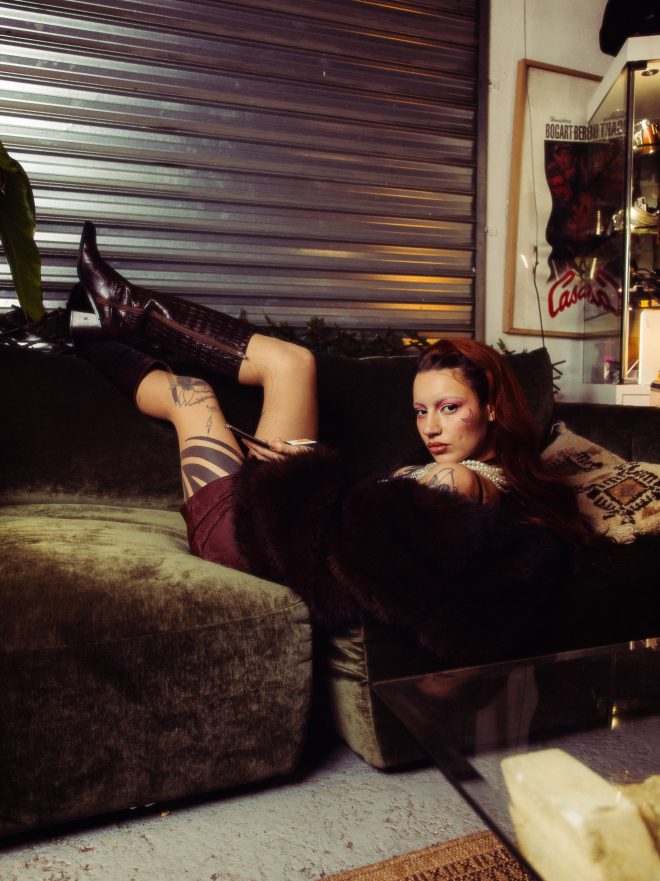
The decision to step forward as HANAA did not arrive as a rupture, but as a settling. A moment where the need to prove, to disguise, to protect, quietly loosened its grip. For a long time, confidence had been something external, something to be learned by watching others. “I was younger, still discovering who I was, and I needed time to grow into myself without pressure,” she reflects. That time unfolded without urgency, marked by patience rather than haste. It was spent experimenting, misjudging, circling the same ideas repeatedly, not to perfect them, but to understand what honesty might actually sound like in her hands.
What emerged was not a new identity, but alignment. Using her birth name became a way of removing distance between the music and the person making it. “I feel more present in my music, more comfortable taking space,” she says. There is no sense of arrival in the way she frames it, only continuity. Music, for HANAA, remains a lifelong process without resolution. The absence of a finish line is not intimidating. It is freeing. “I’m still learning, still evolving, and I hope I never stop.”
Her relationship with sound was shaped long before clubs or studios entered the picture. Growing up in a heavily restricted home environment and then going into foster care, adaptation became second nature. There was no single defining incident, only a persistent demand to reshape herself to fit circumstances she did not choose. “Very early on in life, I learned how to disappear,” she says, without dramatization. At her mother’s home, leaving the house was not a given. Social life narrowed. Silence filled the gaps.
Music slipped into that silence as refuge. Not immediately, not all at once, but gradually. It became the one place where presence was possible without explanation. “Music allowed me to exist without performing that role,” she says. Without having to justify herself. Without becoming someone else for safety. Even now, she doesn’t describe the act of making music as invention. It feels closer to returning. A quiet reconnection with something that was always there, waiting.
As a teenager, escape rarely meant distance. It meant motion. The simple act of sitting in a car, even for mundane errands, carried emotional weight. “For me, it was a feeling of freedom,” she recalls. Electronic music amplified that sensation. Where life felt frozen, rhythm suggested progress. Repetition became grounding rather than restrictive. The pulse implied that time was still moving forward.
What mattered just as much was the absence of judgment. “There were no lyrics telling me how to feel,” she says. No narrative demanding interpretation. Only texture, tension, release. That openness allowed her to project her own emotions without contradiction. During darker periods at home, those feelings extended into shared moments with her sister, watching festival broadcasts on television. Vast crowds, synchronised movement, a distant sense of collective release. “You could belong simply by feeling the same rhythm.”
Electronic music offered structure without confinement. It taught her that transformation does not always require escape, that change can occur internally, even when the surroundings remain unchanged. That lesson still shapes her work today. The music she makes now is built as a space to step into, to breathe inside, to hold onto when nothing else feels stable. Not a solution. A companion.
When listening became necessary
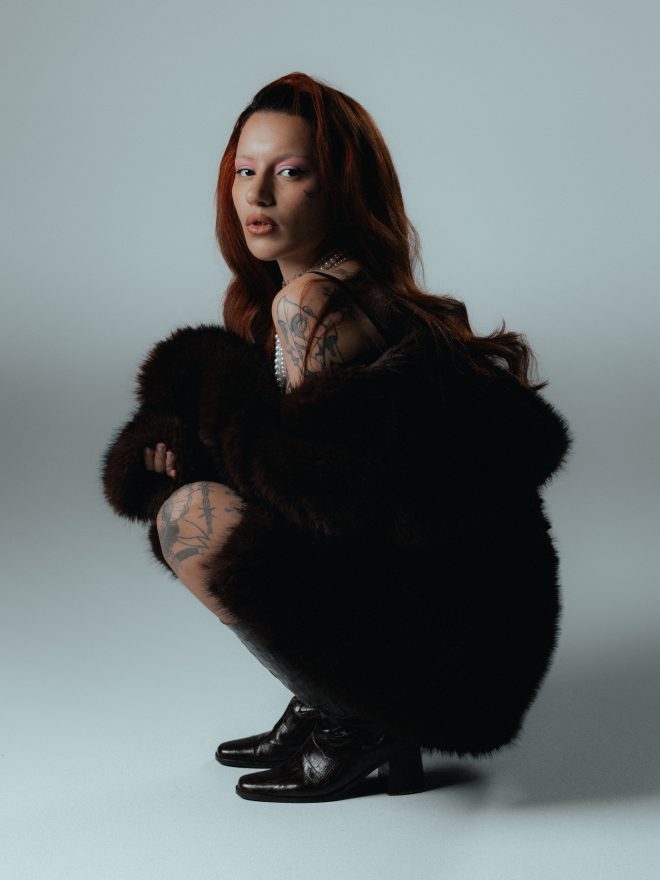
At some point, music stopped being something HANAA turned to out of curiosity or pleasure and became something far more essential. “I needed to breathe and exist,” she says, returning to the atmosphere of her childhood and teenage years. “My home was a heavy, restrictive place, and the electronic music my sister and I listened to was a bubble. It was a space where we could feel free, even if only in the living room or in the car.” What formed there was not a hobby or an interest, but a private refuge. A way of enduring moments that offered no other form of relief. “It wasn’t just pleasure. It was a way to get through very difficult moments.”
Those early emotional imprints have never dissolved. They sit quietly inside the music she makes now, shaping its tone and its density. “When I create today, those connections are still alive,” she explains. “They’re in the textures, in the pads, in the piano, in the way my live shows hold both intensity and intimacy at the same time.” Music remains a place of safety, but the relationship has shifted. “It’s still a safe space for me, but now I can guide others through that same journey. I can invite people to feel, to reconnect with their own emotions, while also protecting myself.” What once functioned as survival has become transmission. The urgency remains, but it has learned how to open outward.
The velocity in HANAA’s music is inseparable from its emotional core. Working predominantly between 148 and 155 BPM, she doesn’t treat tempo as a technical decision, but as something instinctive and bodily. “For me, the tempo, the drive, that whole BPM range, it’s almost like a heartbeat,” she says. “It’s the physical vessel for whatever emotion I’m carrying at that moment.” Speed, in her hands, is not about escalation. It’s about honesty. “When I translate intense feelings into music, it’s not about forcing energy. It’s about letting the emotional truth dictate the rhythm.”
That approach shapes how the music feels on a dance floor. Even at its fastest, it never closes in. “I imagine the listener not just moving, but inhabiting the music,” she explains. “Feeling the tension and the release, the euphoria and the vulnerability at the same time.” She is acutely aware of how easily high BPM can lose its humanity. “Fast music can become aggressive or mechanical if it’s only technical,” she says. “That’s why I spend so much time shaping space, texture, and melody. I want the music to stay human, even in constant motion.” The goal is not spectacle, but recognition. “I want someone on the dance floor to connect with a feeling they can’t name. That’s when the energy becomes meaningful, not just kinetic.”
If the dance floor is where the music is shared, the studio is where it is confronted. HANAA describes her relationship with production as visceral, unfiltered, and deeply emotional.
“I produce with my gut. Every track comes from somewhere deep inside me,” she says. “When I’m in the studio, I cry, I laugh, I feel everything at once. It’s not just about arranging sounds or finding the right tempo. It’s where I confront memories and emotions I can’t reach anywhere else.”
The intensity isn’t cultivated. It’s inevitable. The studio is where she feels most at home.
“At the beginning, I didn’t even realise there were multiple ways to make music, I was searching, absorbing, trying to understand the rules. I started to see the studio not as a technical tool, but as a living space. A mirror of my inner world. Every sound, every texture, is chosen as much with my heart as with my mind. That’s what makes the music feel human to me.”
That humanity, however, was tested.
“Isn’t it strange to develop within a scene that often no longer prioritises emotion, or even the music itself? Coming to terms with the idea that something so personal could be turned into a capitalist entity was a shock. For a while, it was actually harmful to me and my output. It felt like something pure had been disrupted. I had to strip things back, protect what mattered, and redefine success on my own terms. I had to stop comparing myself to others.”
That process led her here.
“This year, I finally feel ready to share my music honestly, without fear. I’m no longer creating to fit into a system or meet expectations. I’m creating from a place of truth.” What once felt like loss now reads differently. “It gave me clarity, independence, and the confidence to stand behind my sound fully, exactly as it is.”
Holding the night
For HANAA, the music she is making now does not arrive as intention or strategy. It feels inevitable.
“It really doesn’t feel like a choice. It comes from somewhere deep inside me, almost like it already exists before I even sit down in the studio. I’m not deciding to make this kind of music. It’s just coming out.”
When she looks back at her earlier life, that inevitability begins to make sense.
“I can see now that what I’m doing is a continuation of the way I used music to escape as a child. This sound has been coming out of me for a long time, and only now am I starting to understand why.”
That thread leads directly to the moment electronic music first entered her world, long before production or performance were possibilities.
“My sound today reconnects me to the moment electronic music reached my sister and me and gave us hope. Those were the sounds that let me breathe when life felt too heavy. They gave me space to feel and to exist when everything else felt closed.”
What has shifted is not the emotional source, but the way it is held.
“Now, every track becomes a way of revisiting memories and experiences and giving them shape,” she explains.
“It’s a release. It reflects my past, but it also allows me to process it, to heal, and to connect with other people. When you’re honest enough, your own story stops being just yours. That’s when it becomes universal.”
That sense of continuity becomes most tangible during extended or all-night-long sets, where time itself becomes material.
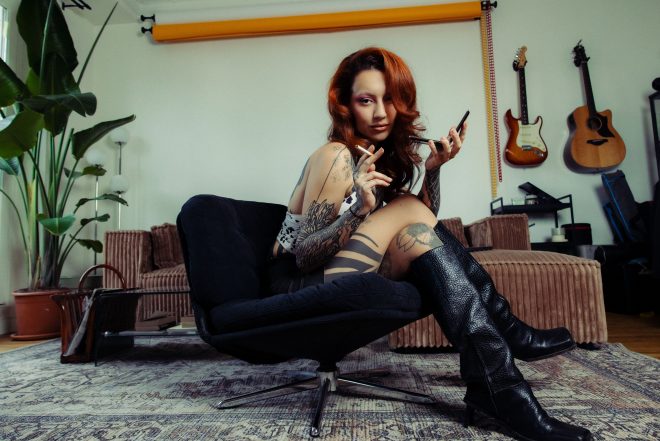
“When I play these kinds of sets, I’m always thinking about creating a journey,” HANAA says. “Not just something people can dance to, but something they can feel.”
The architecture of her nights is intentional but fluid. “I think a lot about rises, about quieter moments, about when to let things breathe and when to release,” she explains. “I want people to experience tension, emotion and euphoria as part of the same flow, not as separate moments.”
Storytelling, for her, is inseparable from structure. “Every moment matters,” she says. “I’m guiding people through an emotional space. They can arrive carrying whatever they’re carrying, without needing to explain it.” The aim is not catharsis in the dramatic sense, but something subtler. “If people leave feeling lighter, more present, more connected to themselves, then the night has done its job,” she reflects. “I’m not trying to overwhelm anyone. I’m trying to hold them for a while.”
HANAA’s sound resists fixed categories because her listening history never respected them. “Every genre I’ve explored throughout my life has shaped me,” she says. “Being a hybrid artist isn’t a limitation for me. It’s actually what makes my work richer and more honest.” In her sets, trance, groove, bounce, pop and dubstep sit side by side, not as provocation but as lived reality. “That’s how I experience music emotionally, so that’s how I play it.”
Her references move freely between scenes and scales. “I’ve headbanged to Destroid, gotten completely lost watching Martin Garrix sets on Tomorrowland TV, and fallen in love with the melodic worlds of Møme and Feder,” she says. “French touch had a huge impact on me, but so did the dark, atmospheric energy of Twin Tribes, the hypnotic drive of psytrance connected to my Swiss heritage, and five years I spent deeply studying industrial music.” A live performance by ENSEMBLE in Berlin became a quiet turning point. “It showed me how immersive and emotional electronic music can be when it’s treated as a physical environment, not just a genre.”
Artists like Boys Noize, Vitalic, The Hacker and Gesaffelstein remain reference points not for sound, but for approach. “They understand how to navigate underground codes while still creating something deeply personal,” she says. “That freedom is what I’m aiming for. Being open to everything I’ve lived and listened to is what allows me to build a sound that’s really mine.”
With the REBIRTH: All Night Long Tour unfolding, a debut single arriving, and a year that marks a shift in visibility, HANAA avoids framing the moment as arrival. What matters to her is the exchange that happens in real time.
“I want people to feel hope, emotion. A breath of fresh air that’s rooted in authenticity.” There is no promise of resolution attached to that. “I want it to feel human and visceral,” she continues. “A space where people can let go, feel deeply, and reconnect with themselves without judgment.”
If someone walks into the room carrying their own weight, she doesn’t claim to remove it.
“I just hope they leave feeling lighter, more open, more curious about what’s possible next.” Not healed. Not fixed. Simply shifted forward, still moving, still breathing.
Stripped of narrative flourish, what defines HANAA’s work at this stage is consistency rather than rupture. The name change, the touring cycle, the growing visibility are markers, but they are not the story themselves. What runs through her music, her process, and her performance practice is a sustained commitment to emotional clarity, even when the sound accelerates. Rather than positioning her output as a reaction to the moment, HANAA operates with a longer internal timeline, one shaped by repetition, patience, and an ongoing refusal to separate feeling from function.
As her profile continues to expand, the impact of that approach is most evident on the dance floor. Her sets do not chase immediacy or spectacle, but build trust over time, allowing intensity to emerge without urgency. The result is a space that prioritises presence over payoff, where movement becomes a shared language rather than a directive. In an ecosystem increasingly driven by compression and visibility, HANAA’s work suggests a different logic: one where staying with the process matters more than arriving anywhere in particular.