


HOVR: The Courage To Be Honest

There is a moment near the end of my conversation with HOVR (Nicki) that changes the way I understand everything that came before it.
For more than an hour, we talk about music, Berlin, loneliness, dancefloors, childhood, vulnerability, and the strange process of translating emotions into songs. We discuss their debut album, Love Language, a record that moves freely between club music, spoken-word moments, introspective reflections, and tracks that feel almost intentionally detached from the expectations of contemporary electronic music. Yet none of those topics ultimately became the heart of our conversation.
Instead, the defining moment arrives through a simple story.
A close friend had recently become a parent. Nicki spent time helping care for the child, becoming part of the family's daily life. One day, while watching Nicki perform on HÖR, the young girl turned to his mother and asked a question.
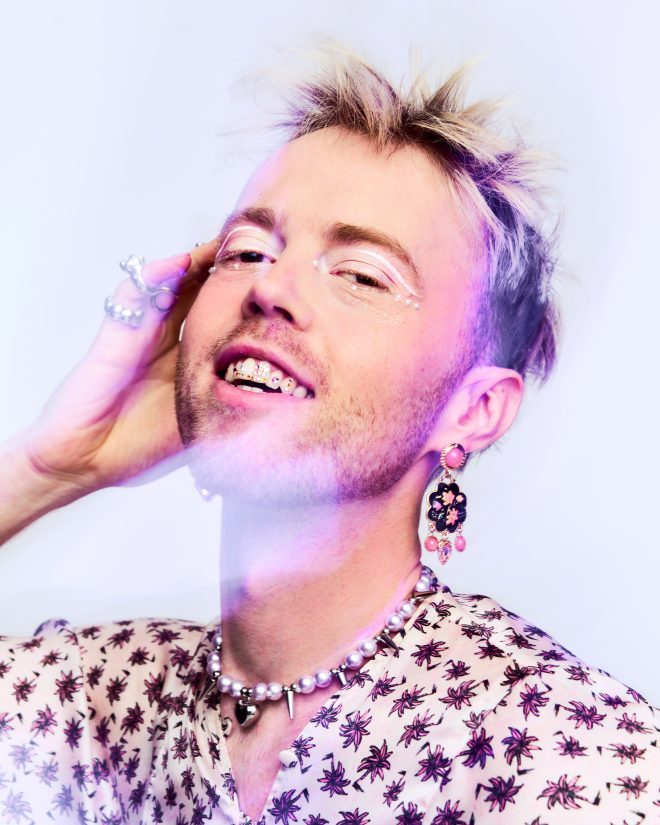
"Why is Nicki always so beautiful?"
Unsure how to answer, her mother later reached out to them and asked what she should tell her.
The response came naturally.
"Tell her I look like this because I'm honest to myself."
Suddenly, everything clicks into place.
The album. The vulnerability. The artistic risks. The decision to step away from expectations and create something that often feels more interested in truth than functionality. What initially appears to be a record about love slowly reveals itself as something else entirely. A record about honesty.

Long before Nicki became one of Berlin's most distinctive electronic artists, they were simply a kid growing up in a small German village. Their mother, a music teacher, introduced them to music from an early age and provided the kind of education many aspiring musicians spend years wishing they had received. Classical training became part of daily life. Structure, discipline, and musical theory were foundations that shaped the way they understood sound.
Had circumstances been slightly different, Nicki might have followed a completely different path.
"If it had been up to my mom," they tell me with a laugh, "I might have become a classical pianist."
Instead, rebellion arrived in the form of a guitar.
Like many artists, Nicki's relationship with music began through a tension between expectation and curiosity. The technical knowledge remained, but the desire to explore elsewhere was impossible to ignore. Eventually, the university brought them to Berlin, a city that could not have been further removed from the environment they had known growing up.
Berlin didn't immediately provide answers.
It provided possibilities.
The version of Nicki that first arrived in the German capital was not yet the artist releasing Love Language. There were university parties to organize, friendships to build and communities to discover. There were open mics, jam sessions, and countless attempts to understand where exactly they belonged inside a city overflowing with identities, cultures and creative voices.
"The whole musical identity thing came later," Nicki tells me.
Back then, the focus was much simpler.
Having fun.
Meeting people.
Building community.
The parties they organized during university were gatherings. Excuses for connection. Places where strangers became friends. Looking back, it is tempting to view those years as the beginning of a carefully planned artistic journey, but Nicki resists that narrative.
"It wasn't that deep back then."
That honesty becomes a recurring theme throughout our conversation. Nicki rarely romanticizes their own story. They speak about growth as something messy, accidental, and often confusing. Their identity emerged slowly through years of experimentation, mistakes, and unexpected discoveries.
One of those discoveries arrived through a single song.
Years into their development as a DJ, Nicki found themselves inside Heideglühen, one of Berlin's most respected clubs. There, they heard Tell you no lie by Floorplan, a track that would fundamentally alter the way they thought about dance music.
Until that moment, much of the electronic music surrounding them felt dark, serious and functional. The goal was straightforward: make people dance. Create energy. Generate reactions.
Then something changed.
"I heard that song and I was like, 'Oh my God, this is different.'"
The experience sounds almost spiritual in retrospect. Suddenly dance music could be joyful. Colorful. Emotional. It could communicate something beyond functionality. A door opened and Nicki walked through it.
The journey that eventually became Love Language arguably begins there.
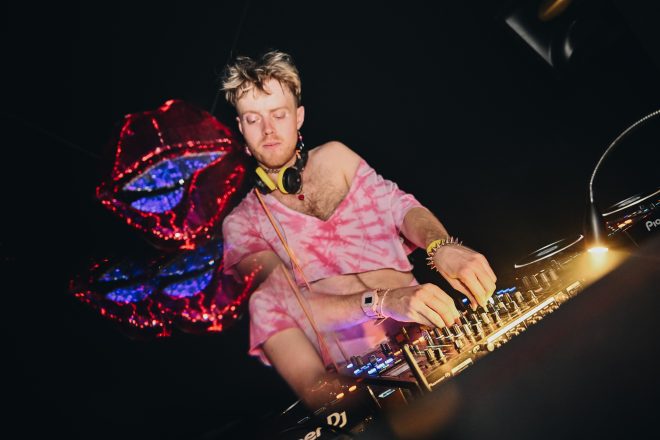
Another important chapter unfolded inside Sisyphos, the legendary Berlin institution that Nicki still considers their home club. More than simply a venue, Sisyphos represented a worldview. It was a living ecosystem built around openness, experimentation and self-expression. There, they began merging their classical education with electronic music.
Many DJs think about tracks individually. Nicki thinks about relationships. Harmonic movement. Emotional progression. Musical architecture. They describe DJ sets less as collections of songs and more as compositions built from existing material. Keys matter. Transitions matter. The emotional logic connecting one record to the next matters.
That perspective would eventually become central to Love Language.
As someone who spends most of his professional life listening to electronic music, I found myself repeatedly returning to the same observation. The first tracks feel surprisingly economical. Elements appear only when necessary. Arrangements remain patient. There is very little interest in overwhelming the listener.
Where others use complexity as proof of sophistication, Nicki moved in the opposite direction.
"I am a lot about simplicity," they explain.
After all, this is someone with a deep understanding of music theory, harmony and composition. Yet Nicki repeatedly returns to the idea that technical knowledge does not automatically create emotional impact. They can write complicated music. They can create intricate harmonic structures. The question is whether those decisions actually serve the song.
Their most successful track to date, "My Voice," revolves around remarkable simplicity. The lesson stayed with them. Rather than adding more ideas, they became interested in reducing them. In creating space where the few decisions that remain become more meaningful.
The result is an album that feels deceptively simple until you spend time inside it.
Months before finishing the album, Nicki's best friend became a parent. For the first time in their life, children became part of their everyday reality. What began as helping a friend slowly evolved into something deeper. Spending time around children forced them to reconsider aspects of themselves they had not thought about in years.
"It changed the way I understood dancefloors. I realized that a lot of things that happen in festivals and clubs have to do with the inner child."
Children dance without self-consciousness. They become fascinated by colors. They invent worlds through imagination. They explore without needing permission. The more Nicki spoke about this idea, the more it felt like a key to understanding the album itself.
"This is not an album for kids; the swearing part is definitely not for kids haha. It's an album for the inner child."
The record never feels immature. The themes it explores: loneliness, love, identity, vulnerability and self-acceptance are deeply adult experiences. Yet they are approached with an unusual directness. The lyrics rarely hide behind abstraction. The emotional intentions remain visible. There is very little irony. Very little distance. Love Language feels refreshingly sincere.

That sincerity becomes especially powerful during the album's quieter moments.
While tracks such as "Rabbit Hole," "All We Have Is Now," and "You" demonstrate Nicki's ability to create records that function beautifully within club environments, other moments deliberately pull elsewhere. "80 BPM" feels intensely personal. The closing "You're Not Alone" exists almost entirely outside traditional dancefloor logic.
These tracks are something rarer. Conversations. Confessions. Letters.
At one point, they compared releasing some of these songs to posting a nude photograph online. The comparison may sound dramatic, but it captures the vulnerability running throughout the project. Several tracks emerge directly from lived experiences. Real people. Real relationships. Real emotions.
That vulnerability extends beyond the album itself and into Nicki's broader artistic journey. During our conversation, they speak openly about loneliness, describing a childhood spent feeling disconnected from those around them. Community was something they spent years searching for.
"I didn't really have friends until I was sixteen."
Perhaps because that helps explain so much of what followed. The importance of community. The value placed on connection. The emotional depth running through tracks such as "You're Not Alone."
"Where there's shadow, there's light," they say.
The same can be said about identity and self-acceptance. First they began dancing differently. Then came experimentation. Dresses. New forms of self-expression. Years later, they came out publicly. The journey required letting go of expectations they had inherited about masculinity, coolness and success.
Only then could Love Language exist.
Interestingly, the album's existence also required others' trust. When Nicki first presented the project to Oliver Koletzki and the team at Stil vor Talent, they knew it represented a risk. Roughly half the record operates outside conventional dance music expectations. Several tracks prioritize storytelling and emotion over functionality.
The response surprised them.
According to them, Koletzki offered remarkable freedom. Deliver a handful of records that could comfortably exist within the label's ecosystem, and the rest could become whatever the album needed to be.
In today's electronic music industry, that kind of creative trust feels increasingly rare.
The result is an album that often refuses to choose between accessibility and authenticity.
Some tracks are built for dancefloors. Others are built for listening. Nicki embraces both.
As DJs, we often reduce music to a simple question: will it work? Will it move people? Will it fit inside a set?
Love Language challenges that mindset. It reminds us that music can exist for reasons beyond utility. Sometimes a song exists simply because it needs to be expressed. Sometimes vulnerability matters more than functionality. Sometimes honesty matters more than strategy.
Which brings us back to that story.
A child looks at Nicki and asks why they are beautiful.
A mother asks how she should respond.
An artist spends no time searching for the perfect answer.
"Tell her I look like this because I'm honest to myself."
By the end of our conversation, it no longer feels like a response intended only for a child. And perhaps that is what makes Love Language resonate so deeply. Beneath the production techniques, the genre shifts, the dancefloor moments, and the vulnerability, the album ultimately asks a deceptively simple question.
What happens when we stop performing versions of ourselves designed for other people?
For HOVR, the answer appears throughout the record.
You become softer.
You become braver.
You become vulnerable enough to tell the truth.
And eventually, if you're lucky, that truth becomes its own kind of beauty.
