


Lolsnake
The art of techno mischief
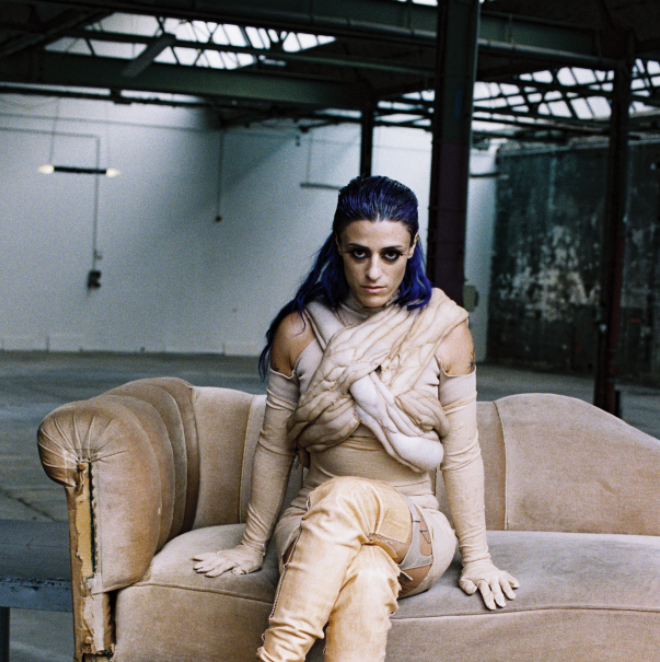
Berlin did not give LOLSNAKE a fixed identity. If anything, it gave her permission to stop searching for one. Long before Weeeirdos became a recognizable force within the city’s nightlife ecosystem, before the international bookings and the carefully constructed emotional chaos of her sets, there was simply movement. Movement between cultures, between expectations, between versions of herself that never entirely fit together. Being Iraqi-American meant learning early how to adapt to different environments without ever fully belonging to any of them. That constant translation shaped the way she moved through the world long before it shaped the way she approached music.
When she arrived in Berlin in 2014, the city offered something different. Not certainty, but space. The possibility of existing without constantly negotiating every part of herself. The clubs became less about escape and more about discovery, environments where unpredictability was not only accepted but necessary. What started as curiosity gradually evolved into authorship. The dancefloor stopped feeling like a place she visited and became something she could actively shape.
That shift eventually materialized through Weeeirdos, the platform she founded in 2017 as a reaction against rigidity within the city’s nightlife culture. Rather than define it through genre or manifesto, she deliberately left it open, allowing the project to become an extension of the community surrounding it. That refusal to over-define things still runs through everything she does now, from her sets to the visual worlds she builds around them. What matters is not neat categorization, but atmosphere, tension, contradiction, and freedom.
“Being Iraqi-American means you’re basically a professional at code-switching. You spend your life in a state of hyper-translation, constantly adjusting your frequency to fit whatever room you’re in. For a long time, I was doing that on the dancefloor too, just trying to figure out how to fit in. But when I moved to Berlin in 2014, it was the first time I felt safe enough in a room to let the freak out and get mischievous.
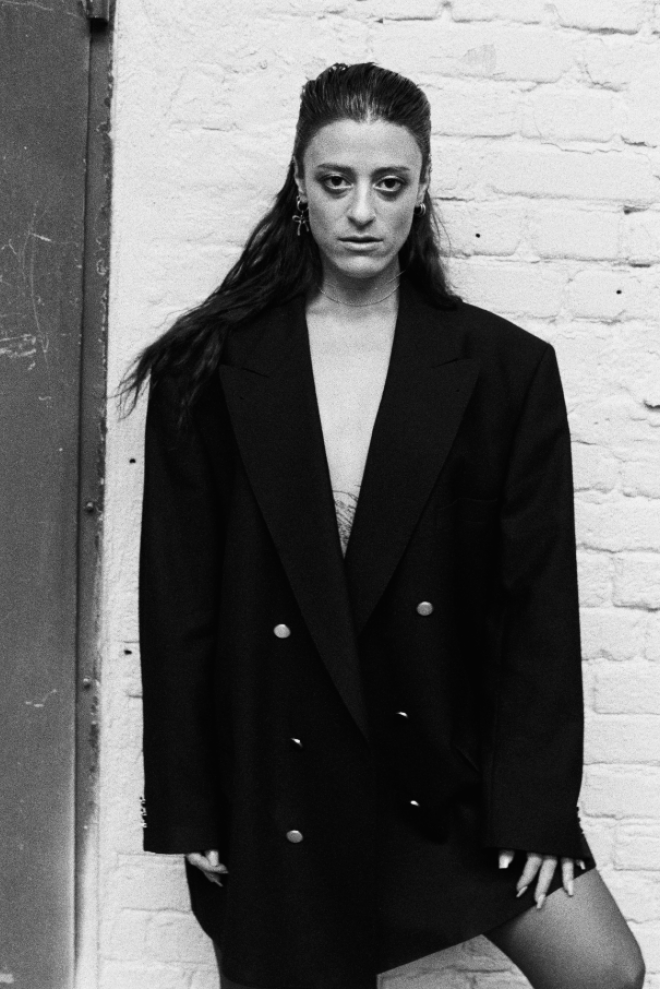
Curiosity was my main motivation. I was so hungry to experience all the different club spaces. I loved not planning nights out and just letting the weekend carry me, discovering hidden locations and corners of the city I never knew existed. I spent my first three years going to all the parties, from Berghain every weekend to the busted raves in Marzahn and the crunchy dives in Neukölln. I was absorbing the energy and the chaos of it all. I was excited. I had ideas. Eventually, being only a guest at these parties got boring to me. It gave me the strength to stop just participating and start building.
During those early years, I was constantly surrounded by other creatives, artists, DJs, writers, and performers who were all doing amazing things but didn’t quite fit the standard mold. I realized we needed a platform of our own for our specific generation of twenty-somethings in the city. That’s when the shift happened. I stopped acting like a guest and started doing things on my own terms. That’s when I started Weeeirdos back in 2017. I intentionally kept the platform undefined, no manifesto, no genre, nothing. Initially, it was just my alias for curating events, a way to create a space that was unpredictable and exciting, so the community I’m part of could finally be just as wild and mischievous as they wanted to be without feeling the need to conform.”
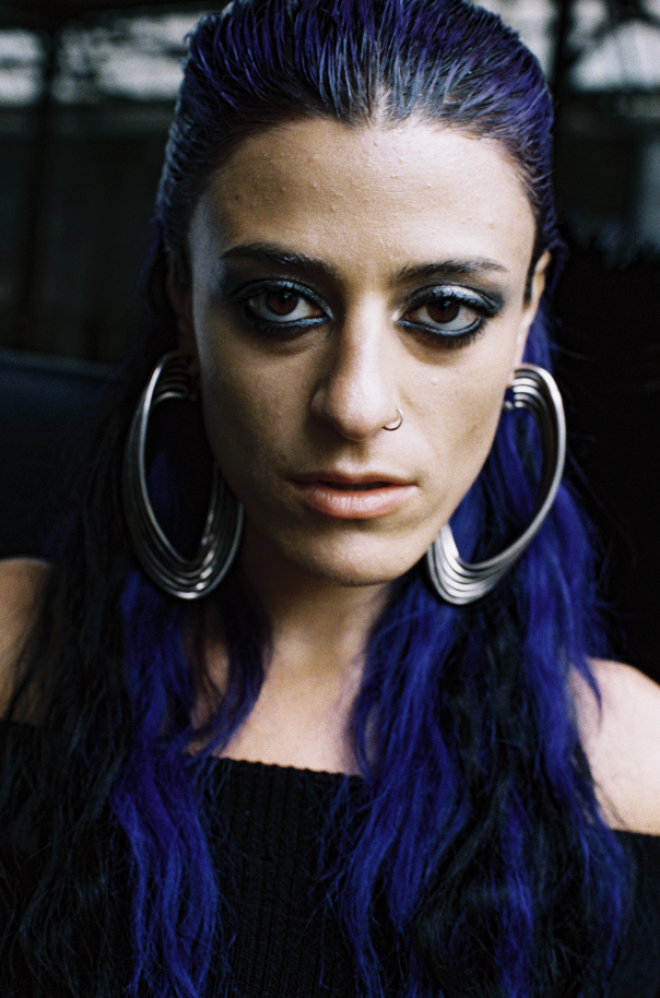
That sense of unpredictability sits at the center of her approach to DJing. LOLSNAKE does not treat a set as a sequence of tracks, but as an environment people physically move through. The architecture matters. So does the emotional temperature inside it. Her sets unfold through pressure and release, industrial textures colliding with moments of deep vulnerability, often without warning. The tension is deliberate, but so is the emotional openness underneath it.
What makes her performances compelling is the refusal to reduce the dancefloor to a single emotional state. Strength and fragility are allowed to coexist. Euphoria is often followed by discomfort. A moment of aggression can suddenly dissolve into something intimate. Rather than smoothing out those contradictions, she leans into them, allowing the room to experience conflicting sensations simultaneously. The unpredictability becomes part of the emotional structure itself.
“I definitely view a set as a physical space you have to inhabit. If the music is the architecture, then the emotionality is the lighting or the atmosphere inside that space. I don’t just want to play tracks. I want to build a realm or a structure that feels solid enough to lean on, but unpredictable enough to keep you on edge and curious.
I approach it by layering and building tension using those industrial, metallic textures to create a sense of pressure and then finding the moments to let that deep emotionality break through with melodic touches. It’s about that push and pull. I want people to feel a sense of release, sure, but I also want them to confront the chaos and invite it into their bodies, to be playful, to be mischievous.
I’m trying to make the dancefloor feel like a place where you don’t have to be just one thing. I like to make people feel like raging and crying at the same time. So experiencing vulnerability but also strength. I want the audience to feel that same freedom I found when I first moved here, the permission to be complex, to be extra and to let the music carry them through those different emotional states without ever needing to explain why.”
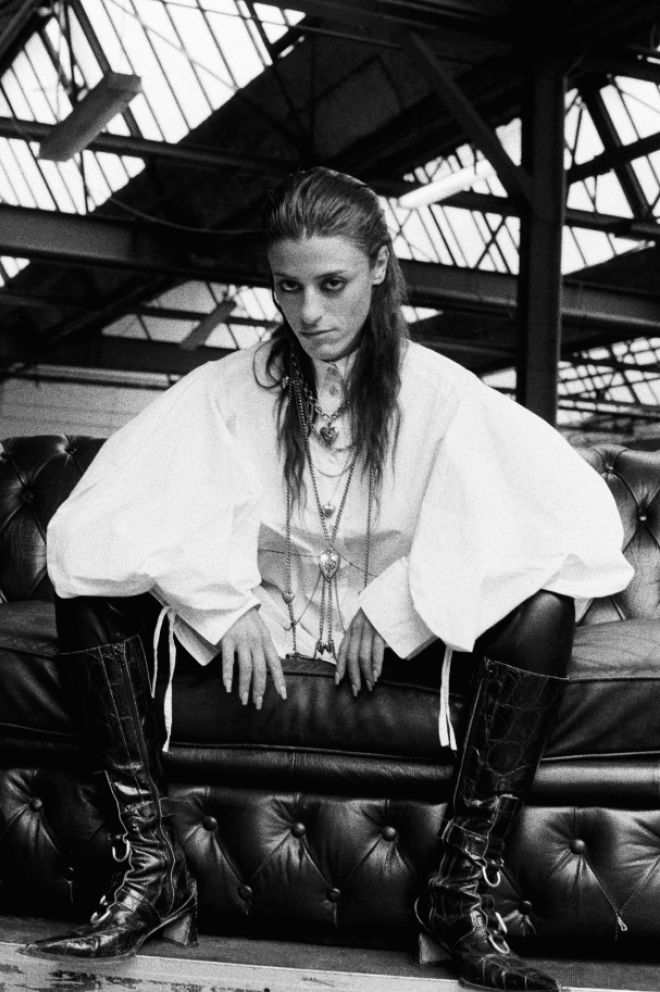
Before Berlin, though, there was Manchester. Moving there at nineteen became an education not just in music, but in survival, community, and self-definition. The city’s nightlife was chaotic, often hostile, but within that chaos existed smaller ecosystems built through DIY spaces, illegal parties, and communities operating outside mainstream structures. Those early experiences fundamentally shaped how she understood nightlife culture.
Rather than waiting for spaces to become welcoming, she learned to seek out or build environments where she could exist comfortably. That mentality remains central to Weeeirdos today. The project’s emphasis on inclusivity does not come through softness or sanitization, but through intensity grounded in mutual care. Loudness and safety are not positioned as opposites. The energy remains raw, but the intention underneath it is protective.
“I moved to Manchester in 2010 when I was 19, and it was my absolute crash course in music and events. I was obsessed. I was going out to at least three events a week. There was so much to find, unusual venues, DIY house shows, raves around Strangeways, and the DIY spaces in Salford that were so exciting back then.
Manchester’s nightlife on the surface was actually a bit of a horror show at the time. There was so much aggression and it often felt unsafe. Because of that, I had to dig deeper to find the spaces where I actually felt comfortable. I was often going to things alone. That environment taught me that community isn’t something you wait for. It’s something you have to actively seek out or build yourself. It showed me that if the mainstream structures are hostile or don’t have a place for you, you just create your own.
Those lessons inform everything I do with Weeeirdos today. It taught me that safe doesn’t have to mean quiet or polite. You can create a space that is loud, raw, and intense, as long as it’s built on a foundation of looking out for one another. Artistically, the influences from those early club days allowed me to be free to experiment with sound without boundaries. It gave me a love for the unpolished and the cross-genre experience. It helped me be more in tune with my emotions and less restricted by definitive genres.”
That same fluidity exists within her visual practice. As both a DJ and visual artist, LOLSNAKE approaches sound and image as part of the same language. Flyers, illustrations, and event aesthetics are not secondary branding exercises but extensions of the emotional atmosphere she wants to create. The visual identity surrounding Weeeirdos carries the same tension as the music itself: playful, distorted, slightly surreal, deeply physical.
The connection between those disciplines feels natural because they emerge from the same instinct. Her drawings often originate directly from dancefloor experiences, transforming moments of chaos into characters and visual fragments that continue living outside the club. The crossover between mediums allows the project to feel immersive rather than fragmented.
“For me, visual art and sound have never been separate. They are just different ways of describing the same feeling. When I’m out on the weekend performing, I’m thinking in terms of texture, weight, and composition. I see a set as a 3D space. It feels necessary for these two practices to coexist because the interplay between visual and sound makes the experience so much richer and deeper. Both practices constantly inform each other.
I’ve hand-drawn and created the flyers for all my events for the last nine years, and the characters I draw are all directly influenced by my dancefloor experiences. If I only did one, the story would feel unfinished.
When I’m curating Weeeirdos, the visual identity is just as important as the lineup because it sets the tone for the world we’re inviting people into. Translating visual thinking into sound is about creating a sense of place. By keeping these practices intertwined, I can build an atmosphere that is more immersive and honest. It’s all part of the same desire to create something unpredictable and raw whether you’re looking at it or dancing to it.”
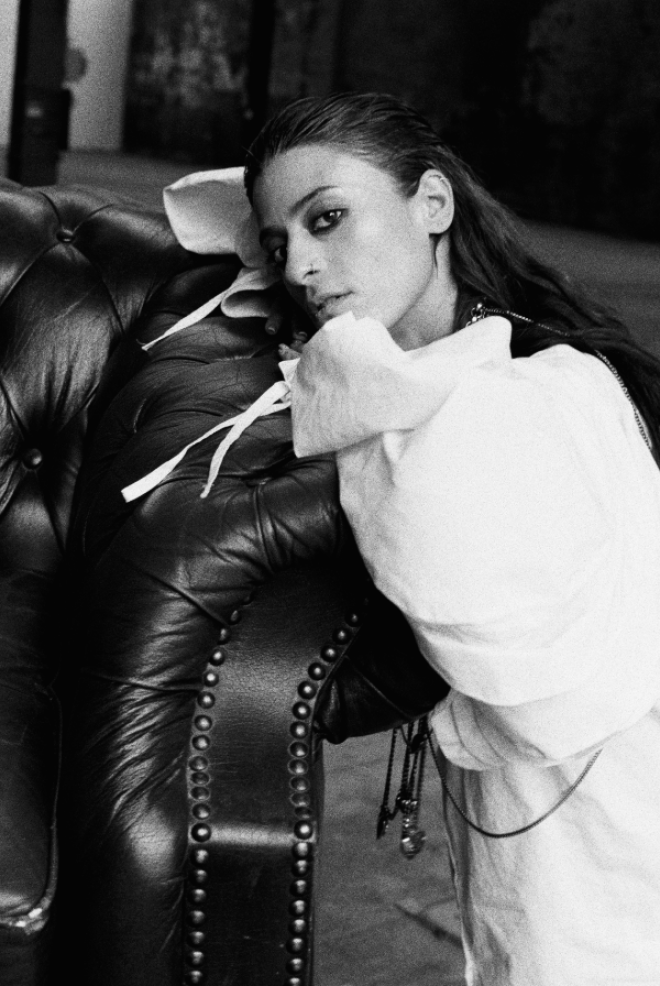
As her profile has expanded internationally, maintaining that same honesty has become increasingly important. Touring introduces pressure to adapt, to flatten complexity into something more universally consumable. LOLSNAKE resists that instinct by protecting the creative isolation that allowed her voice to develop in the first place. Her process remains intentionally insulated from industry standardization.
That refusal to conform extends beyond music into the emotional philosophy behind her sets. She is not interested in delivering polished perfection or predictable crowd service. The goal is to create experiences that linger precisely because they feel unstable, surprising, and emotionally contradictory. What she calls “Techno Mischief” becomes less a stylistic choice and more a methodology.
“Maintaining my voice comes down to protecting the bubble I’ve built for myself. I’m entirely self-taught, and because I didn’t follow the established rules of how to play, I’ve always gone my own way. I don’t listen to other artists’ recorded sets because I want my creative process to remain unfiltered and unpolluted by industry trends.
While I’ve been inspired by the energy of live sets I’ve experienced in clubs over the years, I navigate touring by staying in my own lane. I don’t want to provide a ‘standard’ experience just because it’s expected. I stay grounded by focusing on the same emotional architecture and mischievous energy I’ve always had. For me, the balance is easy: as long as I am being honest and inviting the audience to be as complex and wild as they want to be, I am staying true to my core.”
Her relationship to sound is also deeply informed by cultural memory. Arabic music, particularly artists like Fairouz and Oum Kalthoum, introduced an emotional scale that continues to surface in her sets today. Not necessarily through direct references, but through pacing, dramatic tension, and emotional excess. There is a theatricality to her approach that feels inherited as much as developed.
“Heritage plays a massive role in the emotional language of my sets because it taught me that music is meant to be felt in the entire body. Those early sonic memories gave me a love for long, building tensions and dramatic releases. It’s why I’m not afraid to let a set be too much or deeply vulnerable. I’ve cried during some of my sets. I feel like I’m translating that soulful, ancestral drama into a club context. It’s about creating a space where the music carries a weight that feels both ancient and future at the same time.”
That willingness to embrace excess feeds directly into the unpredictability of her performances. LOLSNAKE treats the dancefloor almost like a narrative space filled with interruptions, strange turns, and sudden emotional detours. Stability exists only so it can be disrupted. The moments people remember are rarely the clean transitions. They are the ruptures.
“From my own dancefloor experiences over the last 16 years, the moments I remember most are always the plot twists, the U-turns that happen in a set. I think of this as Techno Mischief, and I love scheming on how to create specific experiences within the framework of a performance so people take home a little goody bag of sonic mementos.
I see the set as a pool of sound, a deep, consistent environment where suddenly an eel swims by, a swarm of jellyfish appears, or electric rays strike out of nowhere. It’s about having a solid foundation but allowing these surreal, surprising elements to break through, keeping the room slightly off-center to ensure no one is on autopilot. By balancing control with total unpredictability, the set becomes a living, breathing thing that can’t be replicated. That unexpected moment is what stays with you for years.”
That philosophy extends naturally into Weeeirdos itself. What began as an event series has evolved into a fully formed ecosystem, one intentionally built for people who felt excluded from the more rigid corners of Berlin nightlife. The focus is not simply representation, but atmosphere, creating a room where experimentation and emotional intensity are actively encouraged rather than controlled.
“When I first moved to Berlin, the scene felt very serious and the sonic range was heavily gatekept. There were strict rules about what you were ‘allowed’ to play, and many communities were completely underrepresented. I felt there was a missing pocket for a space that broke those rules, especially for the freaks.
With Weeeirdos, I’ve always insisted on keeping it a one-room party. Sticking to one room creates the intimate environment necessary for building a real community. It’s where the regulars actually find each other and connect. Within that single room, I program the music to keep you interested all night by never sticking to one genre or style. It’s about taking people on a journey where the energy is constantly shifting.
Ultimately, I’m building a platform for us weeeird individuals. I try to create a space where the music is excellent and unpredictable, and the environment feels like it belongs to the people in it. Weeeirdos is a home for the creative chaos that usually gets polished away or filtered out by more traditional clubs.”
For LOLSNAKE, nightlife has never been politically neutral. The dancefloor functions as a temporary model for a different social reality, one where freedom, fluidity, and self-expression are not abstract ideals but lived experiences. The impact extends beyond the club precisely because those moments of liberation stay with people long after the music ends.
“I view club culture as a form of soft power that promotes liberal values of freedom of expression across all facets of life as an individual. To me, the dancefloor isn’t just an escape. It’s a site of transformation and a rehearsal for the world we actually want to live in. It’s a space where we can reject conservative standards and practice a different way of existing together.
People enter these environments, experience being their most unfiltered selves, and leave transformed. Those individuals then carry that sense of freedom and confidence back into their outer communities, influencing the world beyond the club. My role is to protect this sanctuary, ensuring that underrepresented voices are the ones defining the energy. We prove that a different social dynamic is possible, one where the freedom we practice inside the rave eventually begins to reshape the world outside.”
Now, with plans to expand Weeeirdos globally and the launch of 6ERPENT9 alongside Matrixxman, her work continues moving outward without losing its internal tension. The scale may be growing, but the instinct remains the same: create spaces where contradiction is allowed to exist openly, where vulnerability and chaos stop canceling each other out and start becoming part of the same emotional architecture.
