


MOODY MEHRAN
Movement, Memory, and the Space In Between
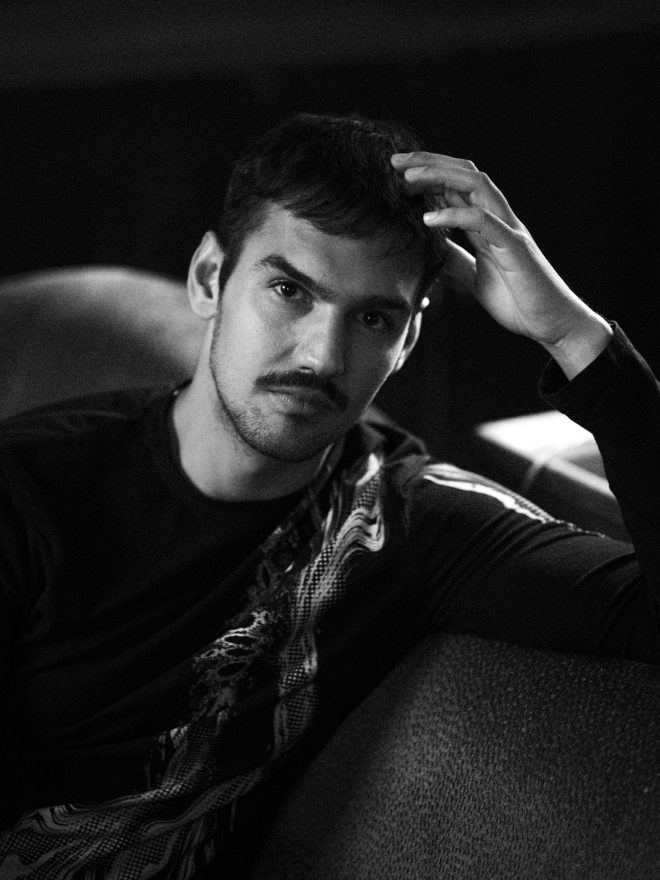
There is a particular kind of artist who does not arrive through a single moment, but through accumulation. Not a breakthrough, but a slow layering of references, environments, and instincts that eventually begin to speak in one voice. Moody Mehran belongs to that category. His trajectory does not feel engineered toward a destination. It feels lived.
What defines his presence is not genre, nor aesthetic positioning, but a sensitivity to energy. The kind that comes from years spent listening before speaking, absorbing before selecting. His sets do not attempt to impose structure on a room. They respond to it, bending and shifting in real time, guided by an internal logic that prioritizes feeling over form.
Across digging, production, collective work, and curation, there is a consistent thread. A refusal to flatten music into categories, and a commitment to preserving its emotional and cultural depth. What emerges is not just a DJ, but a translator of movement, memory, and tension across the dancefloor.
Identity Beyond Genre
“Before I got into electronic music, I was mostly listening to hip hop and sometimes gabber. Around the age of 12, that started to change when I discovered Chicago house, partly through GTA San Andreas and the SF-UR radio station. I remember hearing tracks there that I could not get enough of, and that was the moment I really became obsessed with that sound. Artists like Mr. Fingers, Joe Smooth, and Todd Terry left a lasting impression on me early on.”
The entry point matters. Not because it defines the outcome, but because it reveals the conditions under which taste is formed. For Mehran, that moment of discovery was not mediated by clubs or industry narratives, but by curiosity. A video game, a radio station, fragments of sound that opened a door before he even knew where it led.
“From there, I kept digging deeper into electronic music. When I started going out around 16, I realized that a lot of the music I was hearing in clubs and festivals was built on the same foundation. I recognized samples and sounds from tracks I already knew, which made everything click. Since then, electronic music and rave culture have been deeply connected to who I am, and over the years, I have taken many different styles with me as part of that journey.”
That realization, the recognition of lineage, becomes a turning point. It transforms listening into understanding. Clubs stop being isolated experiences and begin to connect to a broader history. What follows is not loyalty to a genre, but to a continuum.
“Over time, I have played many different genres, but the core feeling has always stayed the same. Those influences are still part of what I do now and come together naturally in my sets without feeling forced.”
“What defines me most at this stage is the energy and feeling of a track. I have never really thought in genres when I play. For me, it is about creating moments in a set that feel unexpected, switching the energy or direction in a way that keeps people on edge and fully present on the dancefloor. That sense of surprise is what I have always loved most about music.”
There is a deliberate unpredictability in that approach. Not chaos, but controlled deviation. A constant recalibration that resists stagnation.
“Now my USB has everything from breakbeat and electro to techno, hard house, ambient, trance, electronic pop, new wave, disco, and basically every corner of house music. A lot of what I collect comes from the late 80s, 90s, and early 2000s, and that era still shapes the sound and mood I am drawn to today.”
Digging as a Way of Thinking
“Digging for me started online, especially around the time I first began going out. I became pretty obsessive about it. After a weekend out, I would often lock myself in for days, going through the deeper corners of the internet looking for new tracks. That was really the first phase of how I learned to search for music.”
Digging, in this context, is not a technique. It is a mindset. A form of attention that extends beyond platforms and formats. The early isolation of searching becomes a foundation for how he processes sound altogether.
“Later, I came into contact with Clone and Triphouse Rotterdam, and through those record stores, a whole new world opened up. That’s when I started buying vinyl and exploring music in a more physical way. After that, I slowly moved back into digging online again because it felt more efficient for me, but in reality, I use every moment to search for new music in one way or another.”
The oscillation between physical and digital spaces reflects a broader balance. Efficiency against tactility. Speed against depth. Neither replaces the other. They coexist.
“These day,s it can come from anywhere. Sometimes it is a car passing by with a track I do not know but that stays in my head for months until I find it. Sometimes it is a random YouTube or Spotify playlist I end up in. It is not really tied to one method; it is more a constant awareness of sound that is always running in the background.”
That awareness becomes instinct.
“For me, a 'find' is something that really hits me emotionally, or something I immediately feel could work perfectly in a set. It is that instinct of how a track fits into a bigger story.”
“I do feel like it is getting harder to find music that really surprises me, simply because I have already heard so much over the years. At the same time, it depends a lot on where I am mentally. Discovering something new that excites me can completely shift my energy, and even rediscovering older music I forgot about can feel just as powerful. On the other hand, it can also be frustrating to search for hours and come away with nothing.”
“What I hope in general is that the next generation of DJs and producers stays open, and does not only focus on what is currently popular within a small subgenre, but allows itself to be influenced by a much wider spectrum of electronic music. There is so much history and so many sounds in this culture, and it feels like a waste not to explore that fully.”
Cruise Terminal and the Discipline of Finishing
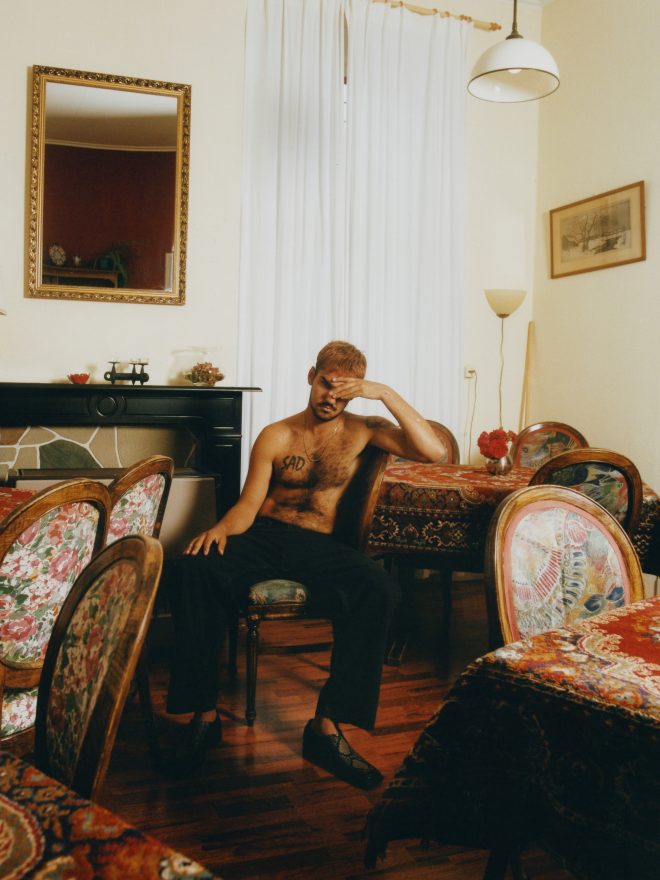
“My first EP is called Cruise Terminal. I have been producing music on and off for years, but I never really had the confidence to fully finish tracks to the point where I would even consider releasing an EP. So in that sense, this release feels like a big step for me and the beginning of a new phase.”
Finishing is often the real threshold. Not starting, not experimenting, but deciding that something is complete enough to exist outside of you.
“The tracks were made at the beginning of 2025 and will be released on vinyl on the 4th of September 2026. The music, just like my DJ sets, is quite hard to define in genres. I made everything purely based on feeling, without thinking too much about where it should fit or what “sound” it represents.”
“I am really grateful to Cryme and Glenn from Seven for their support and for immediately being open to releasing my music. That trust meant a lot to me, especially at this point in my journey. A big part of being able to finish things also came from learning to ask for help from friends and trusting that process more.”
“In a way it reflects a newer version of myself, but it also shows how much I have grown through the process of finishing it. That is something I want to keep building on. As soon as this is out, I already feel motivated to move forward and focus on releasing more music more consistently.”
Music, Politics, and the Cost of Visibility
“A big part of why electronic music resonated with me in the first place is its political and cultural history. It comes from spaces of resistance and expression within Black American, Latin and queer club communities, and even though I came into it later, that sense of unity and opposition to the norm was something I immediately connected with.”
There is an awareness here that goes beyond aesthetics. A recognition that the dancefloor is not neutral. It carries histories, tensions, and responsibilities.
“I have always felt like an outsider and never really fit within 'the norm”. That changed when I got pulled into the club scene, where I finally felt space to be myself. From that point on, music became one of the main ways for me to express that feeling.”
“Both music and politics have been two of the strongest external forces shaping who I am. Because of that, I have often felt a responsibility to use my platform in support of people and communities that are being suppressed or overlooked.”
That responsibility, however, comes with consequences.
“At the same time, that relationship has shifted in the last few months. I have experienced the downsides of speaking out, from being excluded in certain spaces to receiving direct threats on social media, especially in relation to political situations like the unrest in Iran.”
“I have always been okay with the idea that there can be consequences to what you say, or that you might not be able to play everywhere because of it. But recently it has reached a point where I have started to feel less and less safe in my own home and environment, due to direct threats.”
“That has not changed my beliefs, but it has changed how I choose to express them. Instead of speaking out directly all the time, I have become more careful and selective in how I engage, and more focused on contributing in other ways.”
“That is also why being part of the Apranik compilation means a lot to me. It feels important to contribute to something that brings together different voices within the Iranian community, where the collective message is more important than any individual statement. I am very grateful to Aida and Nesa for asking me to be part of it. My track, Kish, named after the Iranian island in the Persian Gulf, is part of this release.”
TLM and the Logic of the Collective
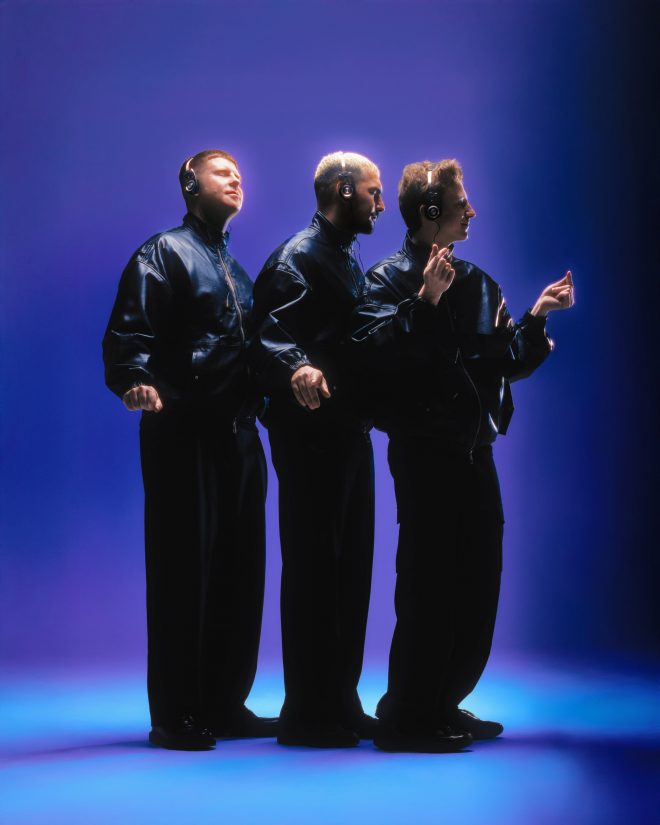
“For me, TLM is basically friends sharing their passion for music together. I really enjoy being able to do shows with people I am close with.”
If solo DJing is introspective, collective performance becomes relational. A constant negotiation of taste, direction, and trust.
“DJing on my own is something I love, and I feel very lucky to do it, but it can also be quite a lonely experience. Especially when you are not feeling your best, that can become difficult. With TLM it feels more like being in a band. We pull each other through different moments, and we create a lot of memories together. That shared experience is something really special to me.”
“I also feel like TLM is much more focused on the collective, where the individual has less weight. It is very democratic in the way we approach sets. We follow the vibe rather than one person leading the direction.”
“So it can happen that I want to go somewhere musically, but Tjade and Gijs feel differently, and then I have to adapt as well. That constant exchange keeps it interesting.”
“We also play much bigger shows with TLM than I usually do solo, which creates a nice balance in my overall DJ life. It keeps things challenging and fresh at the same time.”
“Both Tjade and Gijs have a big influence on me as a person. I learn a lot from them, and I am very grateful that I get to do this with them. Tjade is more of a visionary, while Gijs is very strong in style and in daring to dream bigger.”
Building Spaces That Last
“I started organizing parties when I was 16, even before I began DJing. My first event was called Feel The Noise, created as a counter reaction to the popular hip hop scene among young people in Rotterdam at the time. I wanted to build something around house music instead.”
Creation, in this sense, begins with the environment. Not music alone, but the conditions in which it exists.
“I organized it together with two classmates, booking artists like Sunnery James and Ryan Marciano, Hardwell and Vato Gonzalez, alongside local friends like Taylan Alan, D-Ribeiro, and Rayzir. It was a very ambitious and intense project for that age, and I was honestly lucky to come out of it in one piece. After that, I swore I would never organize an event again.”
That distance did not last.
“I eventually found myself drawn back into organizing because I have always enjoyed bringing people together and creating something around music.”
“In the years that followed, I also did a lot of different concepts at BAR Rotterdam, where Jetti Steffers, the owner and booker, gave me the freedom to curate and host events there. That space played an important role when developing as a curator.”
“From there, I focused more on community-driven projects like Acid Hamam, Doogh Life, and Diaspora Radio, all centered around connecting people within my circle and wider community.”
Growth, however, introduces limits.
“At a certain point, though, as my DJ career started to grow and I became more focused on producing music, I realized I could no longer balance everything in a healthy way. That made me take a step back from organizing full events.”
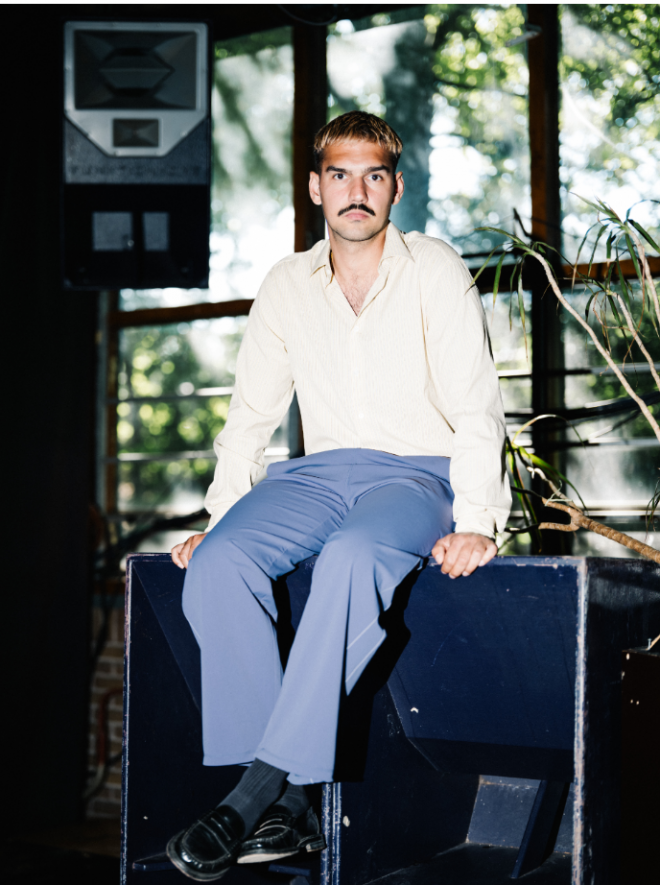
“Moody Mehran Invites came from that shift. Instead of building everything from scratch, I now focus on curating nights where I invite artists I am really inspired by at that moment to share the space with me. It feels more focused and sustainable, but still keeps the essence of what I enjoy most, which is bringing people together through music.”
“The next edition is on June 20 at Shelter, where I will be playing alongside Merel Helderman, Papa Nugs b2b Cromby, and myself.”
There is no single narrative that defines Moody Mehran, and that is precisely the point. His work resists reduction because it is built on accumulation rather than positioning. Each layer, from early discovery to political awareness, from solitary digging to collective performance, adds dimension without flattening what came before.
What remains constant is intent. A commitment to feeling over formula, to history over trend, and to connection over control. In a landscape that often rewards clarity of branding, his strength lies in something less immediate but more durable. An ability to hold complexity without needing to resolve it.
And on the dancefloor, that translates into something rare. Not just movement, but presence.
