


Shermanology: family frequencies
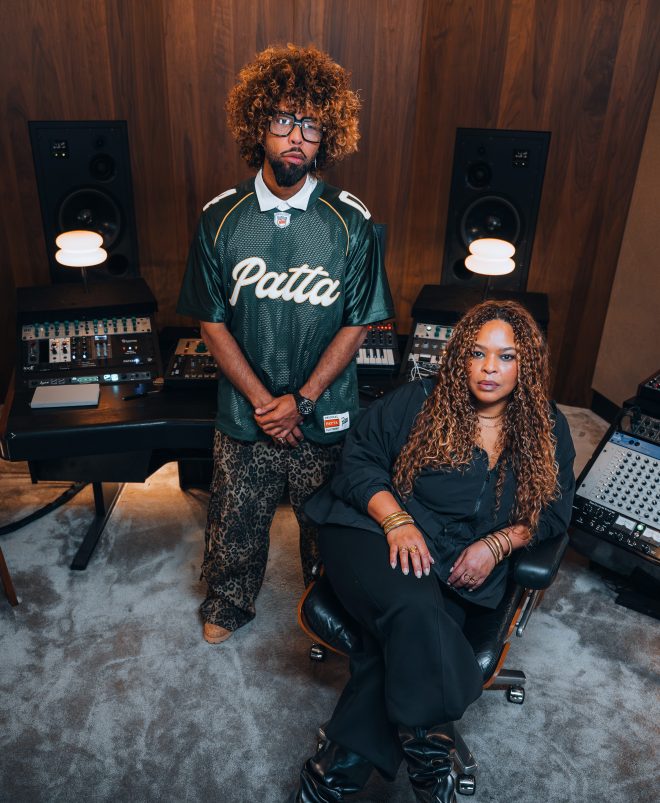
Shermanology has never felt like a project assembled around a format. It carries the warmth of something older than the dancefloor, something formed through family, movement, and shared memory long before it became a global house identity. Andy and Dorothy Sherman carry a private rhythm into public space, and that rhythm is what gives the project its unusual emotional directness.
What makes the project endure is that it has never lost that human center. Even when the records are built for large rooms, they still feel playful, warm, and lived-in. There is personality in the hooks, family history in the harmonies, Caribbean and Surinamese influence in the rhythm, and a refusal to polish the music until its character disappears. Shermanology’s scale has grown, but its emotional logic remains intimate.
“The reason that connection feels so real is actually quite simple: we’ve always been incredibly close. We shared the same friends as kids, as teenagers, and even as adults. We have the same taste in music and the same sense of humor. A big part of that bond grew even stronger when we moved to Curaçao at the ages of 12 and 14. We left our family and friends behind, and for a while we didn’t really know anyone. During that period, we became even closer because we truly had each other.
Not long after, we made new friends, and once again we shared the same circle. Music brought us even closer together. When we were around 15 and 17, we started an R&B group with our cousin called Triple S. We performed in clubs, appeared on TV shows, and sang backing vocals together. We always knew we would end up making music together. I think that’s something people can hear and feel in our music today. You can hear our past, but also our future in it.”
That past lives inside the music, It appears in the way Shermanology treat rhythm as something communal, vocals as something embedded rather than added, and humour as a serious creative tool.
The word they use for that process is telling: “Shermanize.” It means taking an idea and pushing it through their own personalities until it carries their humour, their warmth, their ear, and their sense of groove. The result can be playful or dark, nostalgic or club-focused, but it has to feel human before it feels correct.
“We’re very conscious of protecting that feeling. I think it comes from the fact that we make the music we genuinely want to make. We always joke about how to ‘Shermanize’ a song. We try to put our personalities into everything we create. For example, we have a song called ‘Pop That,’ and that’s such an Andy song. When our friends and family heard it, they laughed so hard because it perfectly reflects Andy’s humor. Then we have ‘Boyz N Da Club,’ which is such a Dorothy song because it reflects Dorothy’s personality and humor.
There are certain elements that make our music feel human and warm, and I think that’s because we’re trained by ear. Everything we do is based on feeling. Our production, songwriting, harmonies, it’s all done by ear. It might not always be technically perfect, but it has to feel good. That’s what matters most to us.”
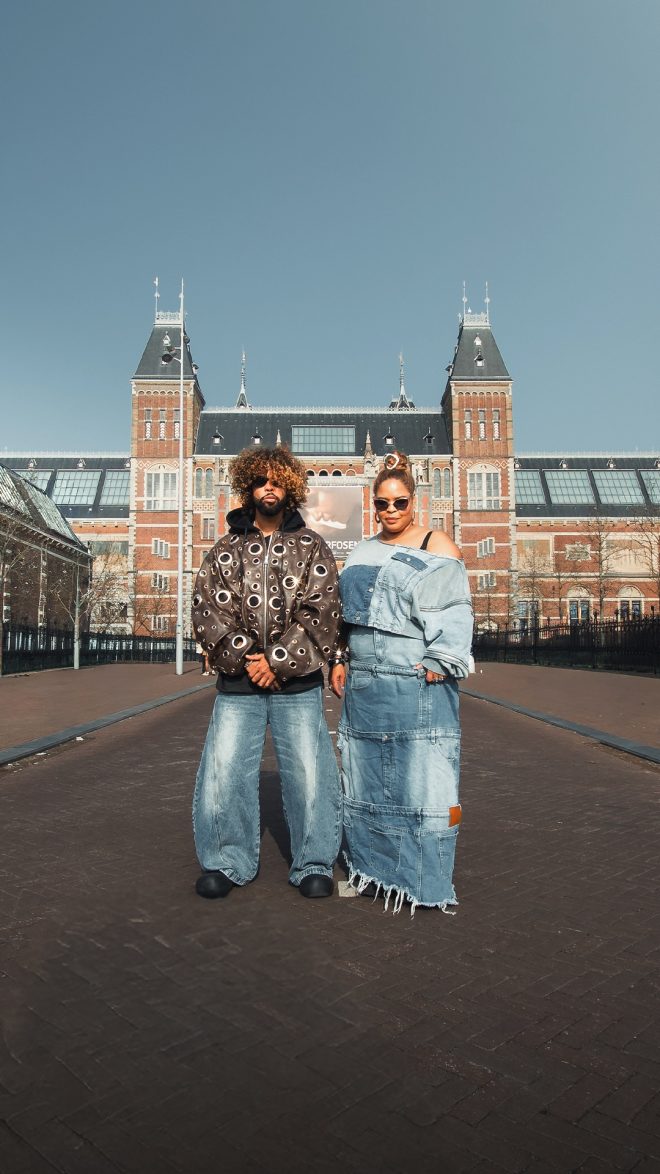
Curaçao remains central to that feeling. The island gave them a musical education that was never narrow, And their Surinamese heritage adds another layer. The hypnotic quality of Surinamese drums remains a source of future exploration, while Papiamento appears as a way of making the music feel closer to home. Their identity appears in language, clothing, rhythm, humour, and the way they carry themselves.
“Living in Curaçao has had a huge impact on us. On the island, you’re surrounded by so many different genres: hip-hop, R&B, dancehall, salsa, merengue, bachata, reggaeton, reggae, ranchera, pop music, the list goes on. Having Dutch roots also exposed us to more electronic music, which had a major influence on us as well.
Today, we still combine all of those musical influences in our music. We often talk about taking cultural sounds and flipping them into something new. We also write songs in our native language, Papiamento, because it feels special to us. We like feeling at home in our music, and there is almost always something Caribbean woven into our songs.
One thing I’d also like to mention is that we’re half Surinamese. Our mother is from Suriname. We mostly talk about Curaçao because that’s where we grew up, but Surinamese music has influenced us too. The drums in a lot of Surinamese music are incredibly hypnotic, and that’s something we’d love to explore more in the future. You can hear our roots in our music, but also in the way we dress and speak.”
Dorothy’s voice has become one of the clearest signatures in the project. The songwriting comes from the same instinctive place as the production: quick ideas, harmonies by ear, and a belief that the first emotional impulse often carries the most truth..
“My relationship with songwriting has always felt very natural. My parents used to say that I was writing songs in my sleep. I didn’t believe them at first, but apparently I was. Andy and I were writing songs as kids, even while doing the dishes. It’s always been something that came naturally to us.
Over the years, I’ve learned not to force anything. The songs that come together quickly are often the ones that perform best in our sets and on the radio. When we started attending writing camps in the US, we noticed that many professional songwriters work the same way. Usually, your first idea is your best idea because it’s the most natural one. Don’t overthink it.
When it comes to singing, that journey has been a little more complicated. About 10 to 12 years ago, I developed nodules on my vocal cords because I was using the wrong technique. It was a horrible experience. I had to learn how to speak and sing all over again. Luckily, I had an amazing vocal coach. It took about a year before I was able to sing properly again. That experience taught me how to take care of my voice, and it helped me rediscover my joy for singing.”
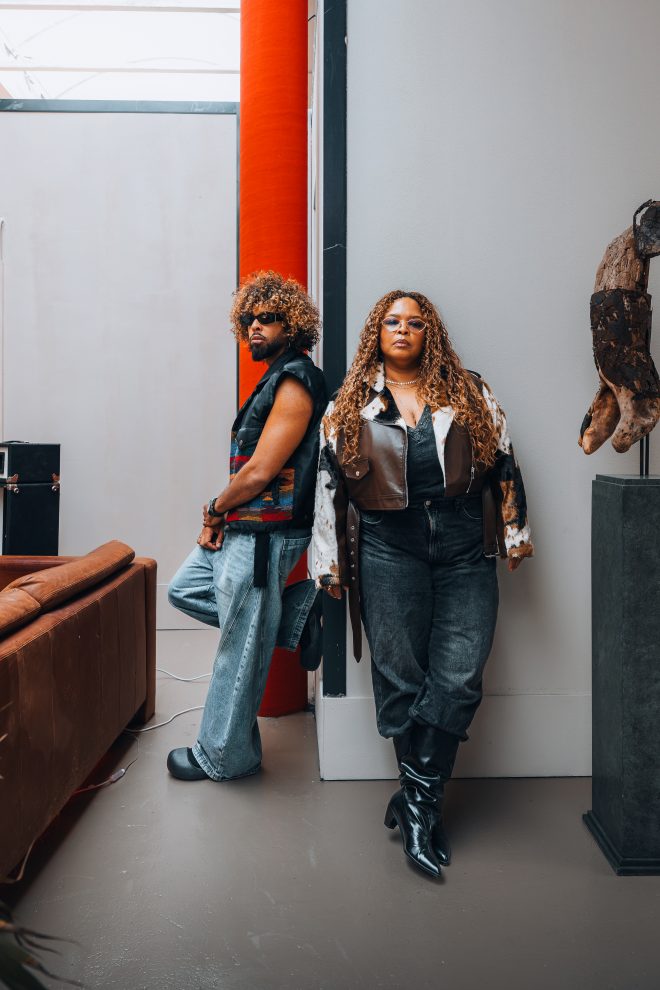
Shermanology’s evolution has often meant resisting outside pressure to simplify. Tracks like “Boyz N Da Club,” “Hotter,” and “It’s A Killa” placed them across different corners of dance culture, but rather than trap them inside one formula, those records expanded the frame.
“It hasn’t always been easy. Many times throughout our career we’ve been told that we should stick to one sound. But we’re both pretty stubborn, and honestly, we’re glad we didn’t listen. We believe that as long as you’re authentic, it can work.
Of course, we do think the music needs to feel cohesive. There are certain elements that make a Shermanology record a Shermanology record. It’s usually soulful, warm, and often carries a little bit of nostalgia. I think people accept the evolution because they know we’re making music we genuinely love. We believe artists should be free to create whatever they’re feeling in that moment.
What’s funny is that we approach fashion in exactly the same way. One day we might feel like wearing something urban. Another day Dorothy might feel like dressing like a princess. Sometimes we love a grungy look, and other days something elegant feels right. Should we wear the same outfit every day? Of course not. We don’t feel the same every day. For us, freedom is doing what you love.”
“In a way, we tend to release more of the uplifting tracks, while a lot of the darker ones stay on our computers. So we decided that it’s time to show all sides of Shermanology. We always write according to the mood we’re in, and trust us, we have a lot of darker tracks. That’s definitely something we’re going to explore much more this year. That doesn’t mean we’re moving away from uplifting music, we’re definitely not. But lately we’ve really been enjoying a darker mood on the dance floor, and I think that’s something we’re going to continue embracing.”
The wider scene around them has changed dramatically. Shermanology came through a more organic era of house culture, but now operate within an industry shaped by algorithms, social media pressure, and short attention spans. Visibility has become part of the job, even for artists whose strengths are rooted in feeling rather than content strategy.
“This is the God honest truth: this is not something that comes naturally to us. We really have to dig deep to find a way of doing it that feels authentic. We think we’ve found a direction that works for us, but it’s still very much a learning process.
There are definitely parts of it that we enjoy. Social media gives us the opportunity to show our personalities, our humor, and even talk about some of our struggles. We don’t want to sound dramatic, but there is actually a lot of planning involved when we create content for social media.
Finding the balance between staying visible and staying true to ourselves is something we’re still figuring out. For us, it’s important to separate social media from our artistic instincts. We see them as two completely different things, and treating them that way helps keep the process from becoming stressful. At the end of the day, we believe it’s better to focus on the things that make us unique rather than trying to do what everybody else is doing.”
On stage, scale changes the psychology of connection. For Dorothy, singing to a smaller room can feel more exposed than performing to thousands.
“Honestly, I think it’s easier to perform for a big crowd than a small crowd. For me personally, Dorothy speaking, it actually feels more intimate when it’s a smaller audience because singing becomes much more personal. I’m kind of shy, so if you asked me whether I’d rather perform for five people or ten thousand people, I would choose ten thousand people for sure.
As for what connects most powerfully with people, I think it’s our energy. I’ve heard people describe it as nostalgic, and I love that. Energy is everything. We genuinely believe we have positive energy, and our music is uplifting and positive as well. I think people can really feel that when they experience us live.”
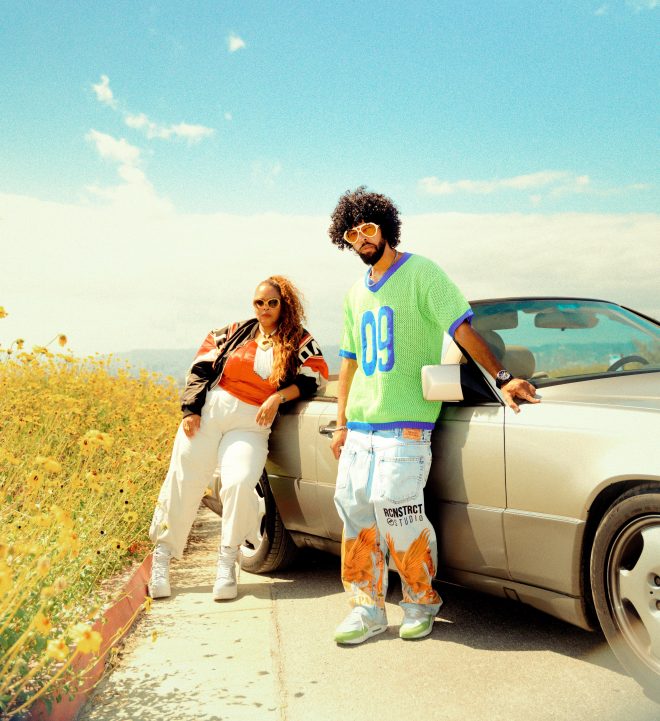
That human connection is also the foundation behind D’EAUPE, their label. The project was born from frustration with an industry that often plays safe, especially when choosing records. Shermanology understand the business logic behind familiar samples and proven formulas, but they also know that some of the most interesting music lives outside those calculations.
D’EAUPE exists to release music they believe in, whether it sounds nostalgic, futuristic, deeper, stranger, or simply dope. The label is a way of protecting their creative instinct from an industry that often asks artists to make the safest version of themselves.
“The reason we built the label is because, as artists, we’ve often felt that many labels tend to play it safe. For example, labels often prefer tracks with recognizable samples or sounds that are already proven to work. And we understand that from a business perspective. They’re running a business and naturally want to invest in music they believe can succeed quickly.
But sometimes that takes away what music is really about. Because of that, a lot of more artistic, creative, or unconventional records never get signed. So we thought: why not create a label where the main criterion is simply whether we think the music is dope? We release music because we believe in it, not because it follows trends or fits within industry expectations. If it’s a deeper record with a throwback vibe, we’ll release it. If it sounds futuristic, we’ll release that too. We don’t want to be limited by what’s considered hot at the moment. That’s exactly why we created D’EAUPE.”
Their upcoming documentary opens the Shermanology story in a more vulnerable way. After twenty years in the industry, they feel ready to speak not only about success, but about the struggles behind it. For artists from an island where global success can feel distant, telling the full story becomes a form of honesty and responsibility.
“We feel that it’s time to tell our story. We’ve been in the music industry for twenty years, and we come from an island where success can sometimes feel out of reach. We want to share our story to inspire others, but also to talk about the difficult parts of the journey.
We live in a world where so much is sugar-coated and where people often prefer to skip over the negative parts. But life isn’t like that. Life is about positives and negatives, ups and downs. We want to talk about our struggles and about how important it is to believe in yourself. We want to talk about the importance of having people around you who believe in you and the importance of family.
Most importantly, we want to tell the truth. Artists go through the same things everyone else goes through, so why hide it? A documentary felt like the perfect way to tell that story. We’ve been talking about making one for years, and now feels like the right time because twenty years is a long time. So much has happened throughout our journey. Some parts are easier to talk about than others because they bring back emotions from those moments. Feeling vulnerable and emotional isn’t always easy, but it all adds to the story.”
The reason Shermanology still feels close despite their scale comes partly from how they were raised. Their father taught them that no person should be treated as above or below another, and that lesson has remained central to the way they move through the industry. It is easy to talk about connection as a concept. It is harder to maintain it when success makes distance available.
“This is really something we have to thank our parents for. When our dad is on stage, he always makes sure he connects with his fans. He takes time to talk to every single person, and we’ve seen how much people appreciate him because of that.
One thing he always taught us is: ‘You’re not more or less than anybody else. You treat the garbage man the same way you treat a celebrity.’ We took that lesson very seriously, and we completely agree with it.
For us, it’s all about connecting with people. We love seeing happy faces in the crowd. We want people to have a good time because we’re having a good time too. When we’re on stage, it genuinely feels like we’re having a party with every single person in front of us. We make eye contact, we try to read the room, and we pay attention to what people react to and how they respond. We appreciate everyone who comes out to see us, and we think people can feel that through our energy.”
The next phase of Shermanology seems less like a reinvention than an expansion of range. They want the music to become more musical, to explore new vocal possibilities, darker moods, unexpected collaborations, and perhaps new alter egos. What keeps the project alive is not the need to repeat what has worked, but the excitement of finding new ways to remain themselves.
What still excites us most is experimenting with music. Finding new ways to use our voices, exploring different sides of ourselves, we still feel like there are a few alter egos left to discover. We’re also excited about collaborations. There are so many artists we’d love to work with, some of which might really surprise people. We already have a few exciting things in the works.
There are still genres we’d love to blend with our sound, and hopefully we’ll be able to share those ideas with all of you very soon.”
